Wondering when to transplant hydrangeas without shocking the plant or losing next season’s blooms? Timing matters because hydrangeas respond differently depending on age, weather, and whether they bloom on old wood or new wood.
The best time to move most hydrangeas is during cool, mild weather when the plant is dormant or nearly dormant. In many climates, that means early spring before strong new growth starts, or early fall after the worst heat has passed.
When to transplant hydrangeas?
Transplant hydrangeas in early spring or early fall for the best chance of quick root recovery. Avoid moving them during hot, dry weather or when they are actively blooming if you can. Smaller plants transplant more easily, and well-watered, cloudy days reduce stress.
Best season to move hydrangeas
Early spring: often the safest choice
Early spring is usually the top choice for transplanting hydrangeas because the soil is workable, temperatures are cooler, and the plant is just waking up. Roots can start settling in before summer heat arrives.
Move the shrub after the ground thaws but before vigorous leaf growth begins. If buds are swelling and shoots are just starting, that is often still a workable window.
Early fall: good in mild climates
Early fall can also work well, especially where summers are hot and winters are not severe. The soil is still warm enough for root growth, but the air is cooler, which lowers transplant stress.
Try to transplant at least several weeks before the ground freezes so the hydrangea has time to establish new roots.
When not to transplant
Try to avoid transplanting hydrangeas in midsummer unless you have no other option. Heat, active growth, and dry soil make it harder for the shrub to recover.
- Do not move them during a heat wave.
- Do not transplant when the soil is waterlogged or frozen.
- Avoid moving a hydrangea in peak bloom unless necessary.
How hydrangea type affects transplant timing
Not all hydrangeas behave the same way, and bloom timing matters. Some types flower on old wood, meaning next year’s flower buds are already formed on last season’s stems. Others bloom on new wood and are more forgiving after a move.
Old-wood bloomers
Many bigleaf hydrangeas (Hydrangea macrophylla) and oakleaf hydrangeas (Hydrangea quercifolia) bloom on old wood. If you transplant them at the wrong time, you may remove or damage flower buds for the following season.
For these, transplanting right after flowering or in early spring before buds open is often the least disruptive approach, depending on your climate.
New-wood bloomers
Panicle hydrangeas (Hydrangea paniculata) and smooth hydrangeas (Hydrangea arborescens) bloom on new wood, so they are generally more forgiving. Even so, early spring or early fall is still the best transplant window.
How to transplant hydrangeas step by step
- Water the plant deeply the day before. Moist soil helps the root ball stay intact and reduces stress.
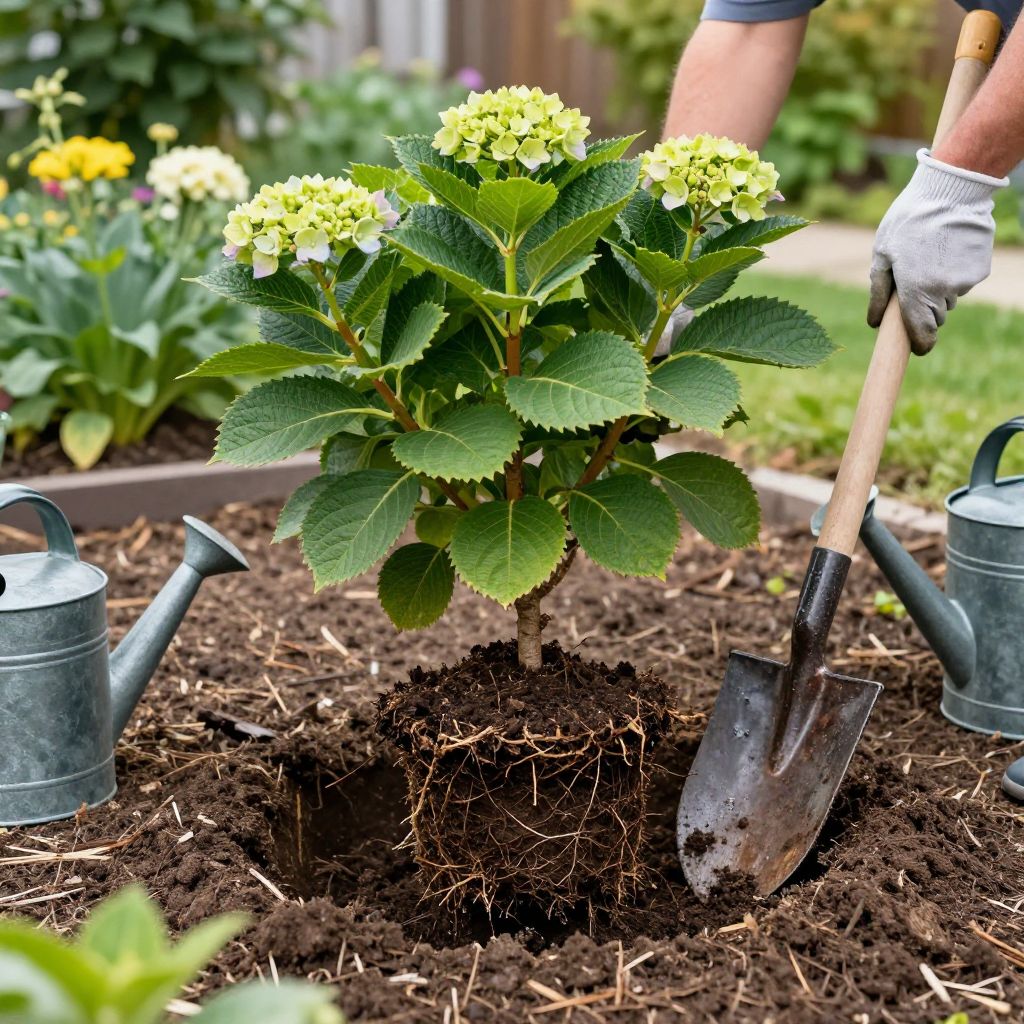
- Prepare the new site first. Dig the planting hole about twice as wide as the root ball and no deeper than the root mass.
- Improve the soil lightly if needed. Mix in compost if your soil is poor, but do not create a hole filled with rich loose soil only. That can encourage roots to stay in the planting hole instead of spreading outward.
- Dig wide, not just deep. Hydrangea roots are often shallow and spread outward. Keep as much of the root ball intact as possible.
- Lift carefully. Slide a tarp or use a shovel to support the root ball. Handle the shrub by the root mass, not by the stems.
- Set it at the same depth. The top of the root ball should sit level with or slightly above the surrounding soil.
- Backfill and water in. Firm the soil gently to remove air pockets, then water thoroughly.
- Mulch the root zone. Add 2 to 3 inches of mulch, keeping it a few inches away from the stems.
Choosing the right transplant site
Hydrangeas do best in conditions that match their natural preferences: evenly moist soil, good drainage, and partial shade in hotter climates. Too much sun can scorch leaves and dry the soil quickly, while too much shade may reduce flowering.
Light
Morning sun with afternoon shade is ideal for many hydrangeas, especially in warm regions. In cooler climates, they may tolerate more sun if the soil stays evenly moist.
Soil
Hydrangeas prefer fertile, well-drained soil that holds moisture without staying soggy. If your site is heavy clay, improve drainage by planting in a raised area or amending the soil modestly with compost.
Spacing
Give the shrub room to mature. Crowding reduces air circulation, which can increase disease pressure and make maintenance harder later.
Aftercare: helping hydrangeas recover
The first few weeks after transplanting matter more than almost anything else. A hydrangea can look stressed at first, but steady moisture and protection from harsh conditions help it re-root.
- Water deeply and consistently. Keep the soil evenly moist, especially during the first growing season.
- Watch for wilting. Some droop is normal right after transplanting, but severe wilting means the plant needs water or shade.
- Mulch well. Mulch helps stabilize soil moisture and temperature.
- Skip heavy fertilizing right away. Too much fertilizer can push weak growth before roots are ready.
- Protect from strong afternoon sun and wind. Temporary shade cloth or a sheltered location can help in hot weather.
How long recovery takes
Some hydrangeas bounce back within a few weeks, while others take most of a season to fully settle in. The plant may focus on root growth first, so flowering can be lighter the year it is moved.
Common mistakes to avoid
Most transplant problems come from disturbing the roots too much, planting at the wrong depth, or letting the shrub dry out after the move. Avoiding these mistakes gives your hydrangea a much better start.
- Planting too deep: This can stress roots and reduce vigor.
- Moving during heat: Hot weather increases water loss and transplant shock.
- Letting roots dry out: Even a short drying period can set the plant back.
- Over-amending the hole: A dramatically different soil pocket can discourage roots from spreading.
- Pruning too hard at the wrong time: You may remove flower buds on old-wood hydrangeas.
Should you prune before or after transplanting?
Light pruning can help reduce stress, but avoid severe cutting unless the plant is overgrown or damaged. For old-wood bloomers, heavy pruning can remove next year’s flowers. For new-wood bloomers, pruning is more flexible, but it is still best to keep the plant balanced rather than bare.
If stems are broken or clearly dead, remove only the damaged wood. Otherwise, let the shrub recover first and do major shaping later, once it is established.
What if your hydrangea is already flowering?
If you must transplant a hydrangea in bloom, expect some flower drop and temporary wilting. The plant will usually survive if you keep the root ball intact and water it well, but it may sacrifice blooms to recover.
When possible, wait until flowering ends. That is especially helpful for bigleaf and oakleaf hydrangeas, which may already have next year’s buds forming.
Signs your hydrangea is settling in
After transplanting, look for steady rather than dramatic improvement. Healthy recovery is often gradual.
- Leaves regain firmness after watering.
- New growth appears within the expected season.
- The plant holds moisture better between waterings.
- Stems remain green and flexible, not brittle.
When to call a move a failure
If a hydrangea stays wilted despite moist soil, develops extensive stem dieback, or shows no new growth when it should be active, the transplant may have been too stressful. In that case, focus on consistent moisture, mulch, and patience before assuming the plant is lost.
Quick takeaway for transplanting success
The best answer to when to transplant hydrangeas is simple: choose early spring or early fall, avoid extreme weather, and keep the root ball moist and intact. Match the timing to your hydrangea type and local climate, then give it steady aftercare so it can re-establish.
If you want to plan the rest of your hydrangea care, it can also help to read more about how and when to prune hydrangeas and choosing the best shade-tolerant plants for your garden.