Wondering when to pick garlic so you get full-sized bulbs instead of small, disappointing heads? Harvesting at the right moment matters just as much as planting and care. Pick too early and the cloves may be underdeveloped; wait too long and the bulbs can split, loosen, or store poorly.
The good news is that garlic gives you clear harvest clues. With a little attention to the leaves, bulb size, and local weather, you can time harvest well and cure the crop for long storage.
When to pick garlic?
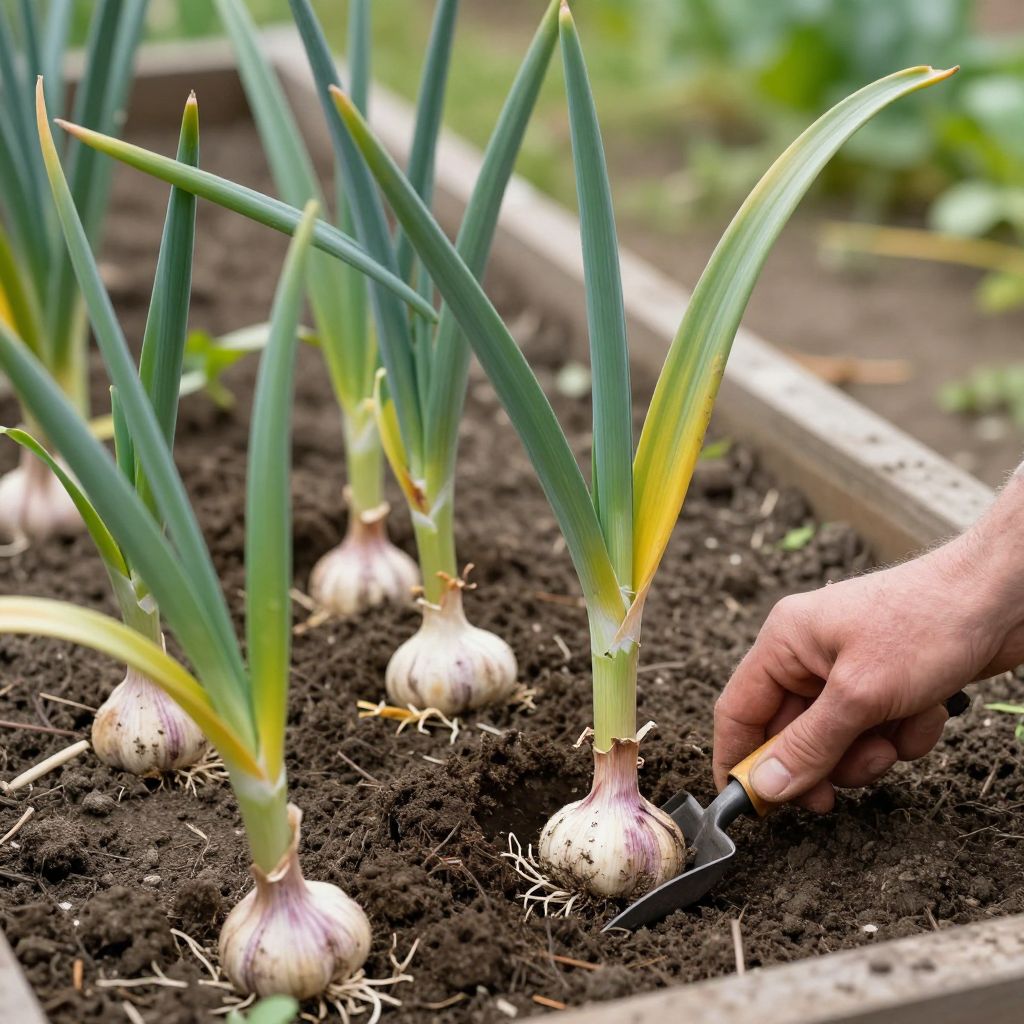
Pick garlic when the lower leaves have browned but several upper leaves are still green, usually when about one-third to one-half of the plant has dried down. For most types, this means the bulbs are mature but not yet overripe. Check a test bulb first if you are unsure, especially in variable weather.
How to tell garlic is ready to harvest
Garlic maturity is easiest to judge by the foliage above ground. The bulb finishes sizing up while the leaves are still partly green, then tops begin to fade as the plant shifts energy into curing and dormancy.
Leaf signals to watch
- Lower leaves turn brown and dry while upper leaves stay green.
- The stalk feels less rigid and begins to soften near the base.
- The bulb looks full when you gently brush away soil around the top.
- For hardneck garlic, the scape has usually been removed earlier in the season.
A practical rule is to harvest when about 4 to 6 leaves are still green on a typical plant, though this can vary by variety and climate. In hot, fast-drying weather, garlic may mature quickly; in cool or wet conditions, it can take longer.
Check one bulb before harvesting the whole patch
If the timing is unclear, dig up one test plant from the edge of the bed. The bulb should be well formed, with cloves clearly defined inside the wrapper layers. If the wrapper feels tight and the bulb is still small, give the crop more time.
Does garlic type affect harvest timing?
Yes. Different garlic types mature at slightly different times, and climate plays a role too. Knowing what you planted helps you read the plant more accurately.
Hardneck garlic
Hardneck garlic usually produces a flower stalk, or scape, in late spring or early summer. Once the lower leaves begin to brown, the bulbs are often close to harvest. Many gardeners remove scapes to help the plant put more energy into bulb growth.
Softneck garlic
Softneck garlic does not form a stiff central stalk and often stores well. It is commonly harvested when a similar proportion of leaves has browned, but the tops may stay green a bit longer than hardneck types. Softneck varieties are often braided after curing if the stems remain flexible enough.
What happens if you harvest garlic too early or too late?
Timing matters because garlic does not continue to size up much after harvest. The plant’s job is to build a bulb in the ground, then dry down for storage.
If you pick too early
- Bulbs may be smaller than expected.
- Cloves can be less fully developed.
- Storage life is often shorter because the wrappers are thinner.
If you pick too late
- Bulbs may split open in the soil.
- Outer wrappers can break down, exposing cloves.
- Bulbs may separate more easily and store poorly.
Overripe garlic is still usable, but it is more likely to dry out unevenly or lose quality in storage. If wet weather is coming and your garlic is close, it is usually better to harvest a little early than to risk rot or splitting.
Seasonal timing: when garlic is usually ready
Garlic is typically harvested in early to midsummer in many temperate gardens, but local conditions matter more than the calendar. Warm springs can push harvest earlier, while cool springs may delay it.
Use your climate as the guide
- In cooler regions, garlic often matures later than in warmer areas.
- Plants in rich, well-drained soil may size up faster.
- Shaded beds usually mature more slowly than full-sun beds.
- Extended rain can delay drying and increase disease pressure.
Instead of relying on a fixed date, start checking the crop once the lower leaves begin to yellow. From that point on, inspect plants every few days so you do not miss the best harvest window.
How to harvest garlic correctly
Garlic bulbs bruise easily, and damaged skins reduce storage life. A careful harvest helps preserve the wrappers and roots so the bulbs cure evenly.
- Stop watering a few days before harvest if the soil is very wet and weather allows it.
- Use a garden fork or spade to loosen the soil several inches away from the bulb.
- Lift the plant gently by the base or leaves, not by yanking hard on the stem.
- Shake off loose soil, but do not wash the bulbs unless you have a specific reason and a dry curing setup.
- Keep the tops and roots attached until curing is complete.
Avoid pulling garlic straight from heavy soil. That can snap stems or tear the outer wrappers, which shortens storage time.
Best harvest conditions
Choose a dry day if possible. Dry bulbs cure more evenly, and dry soil is easier to loosen cleanly. If rain is forecast and the crop is ready, harvest before the wet weather arrives.
What to do after harvest: curing garlic
Curing is the drying period that prepares garlic for storage. Freshly dug bulbs are not ready to keep in the pantry right away, even if they look mature.
How to cure garlic
- Place bulbs in a single layer or hang them in small bunches.
- Keep them in a warm, dry, well-ventilated place out of direct sun.
- Allow several weeks for the necks and outer skins to dry fully.
- Do not trim roots or tops too soon if you want the best storage life.
Properly cured garlic should feel dry and papery, with a firm bulb and a neck that has tightened. Once cured, you can trim roots, cut tops, and store the bulbs in a cool, dry place with airflow.
Storage tips after curing
- Keep bulbs away from damp basements and sealed plastic bags.
- Store in mesh bags, baskets, or crates with ventilation.
- Inspect occasionally and remove any bulbs that soften or mold.
Common garlic harvest problems and fixes
The leaves are still mostly green
If most leaves are green and the bulbs are still small, the crop is not ready. Wait and check again in a few days. Garlic often finishes quickly once the lower leaves begin to fade.
The bulbs are splitting in the ground
This usually means the crop is past peak harvest time or has been stressed by uneven moisture. Harvest immediately and cure the bulbs as soon as possible. Split bulbs can still be used, but they will not store as long.
The tops fell over early
Sometimes garlic flops before it is fully mature because of wind, disease, or a heavy crop. Do not assume it is ready just because the tops are down. Check the leaf count and test a bulb before harvesting everything.
There is rot or soft tissue
Wet soil, poor drainage, or fungal problems can cause bulb rot. If you see soft spots, harvest what you can salvage, remove damaged cloves, and improve drainage for future plantings. Rotate garlic to a new bed if disease has been a recurring issue.
Growing conditions that help garlic mature well
Good harvest timing starts with good growing conditions. Garlic performs best in fertile, loose soil that drains well and gets plenty of sun.
- Sunlight: Full sun is ideal for strong bulb development.
- Soil: Loose, well-drained soil helps bulbs expand evenly.
- Organic matter: Compost improves structure and moisture balance.
- Drainage: Poor drainage can lead to rot and smaller bulbs.
Garlic does not like soggy ground. If your soil stays wet for long periods, consider raised beds or adding organic matter to improve drainage before planting next season.
Quick harvest checklist
- Lower leaves are brown or yellow.
- Several upper leaves are still green.
- Bulbs feel full when gently checked.
- Weather is dry enough for digging and curing.
- You have a ventilated place ready for drying.
If most of these boxes are checked, your garlic is likely ready or very close. When in doubt, test one bulb rather than guessing across the whole bed.
Final tip for timing garlic harvest
The safest way to know when to pick garlic is to watch the leaves, test a bulb, and harvest before the crop becomes overripe. Once you learn how your variety behaves in your garden, the timing becomes much easier. For more help with garlic care, you may also want to read about how to grow garlic in raised beds and how to cure and store garlic after harvest.