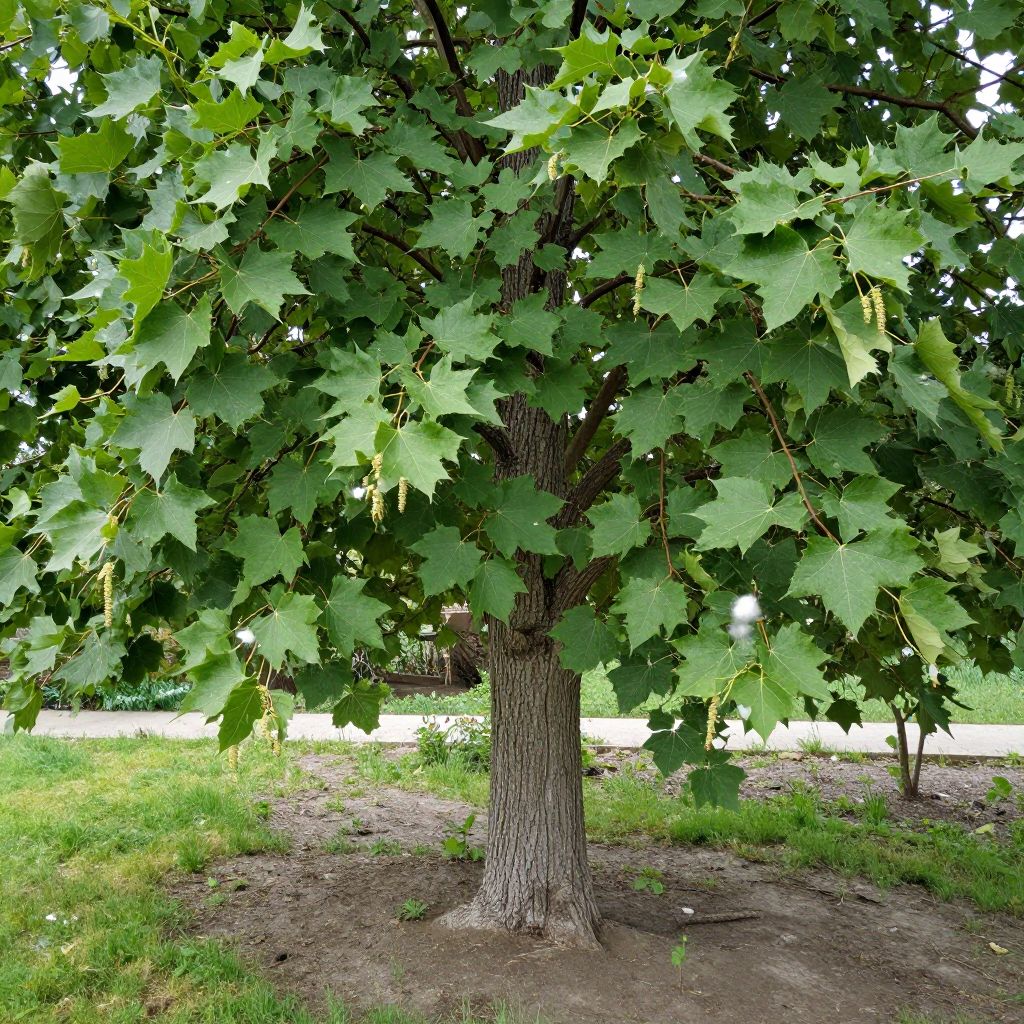
What does a cottonwood tree look like? If you’re trying to identify a fast-growing tree near a creek, in a park, or along a fence line, cottonwoods are usually easy to spot once you know the key features. Their tall, open form, triangular leaves, and cottony seed fluff are the biggest clues.
They can look a little different depending on age, species, and season, so it helps to compare several traits at once. Below, you’ll learn how to identify cottonwood trees confidently and what to expect if one is growing in your landscape.
What does a cottonwood tree look like?
Cottonwood trees are large, fast-growing poplars with a broad, irregular crown, thick trunk, and leaves that flutter in the wind. In spring, female trees release white cotton-like seed fluff. Look for long flattened leaf stems, triangular or heart-shaped leaves, and rough bark that becomes deeply furrowed with age.
How to identify a cottonwood tree step by step
When you’re asking what does a cottonwood tree look like, it helps to identify more than one feature. A single clue can be misleading, but the combination of bark, leaves, shape, and seed fluff is usually reliable.
- Check the size and habit. Cottonwoods are typically tall, broad trees with a loose, open canopy rather than a tight, rounded shape.
- Look at the trunk. Mature bark is gray to gray-brown and deeply furrowed, often with thick ridges.
- Inspect the leaves. Leaves are usually triangular, deltoid, or broadly egg-shaped, with a pointed tip and fine teeth along the edge.
- Notice the leaf movement. The flattened leaf stalks let the leaves tremble and flutter in even a light breeze.
- Watch for seed fluff. Female cottonwoods produce cottony tufts that carry seeds in late spring or early summer.
Leaf shape and texture
Cottonwood leaves are one of the easiest identification clues. They are often 2 to 6 inches long, shiny green on top, and paler underneath, with a smooth or lightly toothed edge.
On some trees, young leaves may look more rounded, while older leaves are more distinctly triangular. The long, flat petiole is what makes the leaves quiver so noticeably.
Bark and trunk
Young cottonwoods usually have smoother, lighter bark, but mature trees develop a rough, deeply ridged surface. The trunk can be massive, especially on older specimens growing near water or in open ground.
If you see a large tree with pale gray bark and a powerful, upright presence, cottonwood is a strong possibility.
Flowers and seed fluff
Cottonwoods are dioecious, which means male and female flowers appear on separate trees. The male catkins release pollen in spring, while female trees later produce the fluffy white seed fibers that give cottonwoods their name.
Important: Not every cottonwood tree will produce the cottony fluff you expect. Only female trees do, and the amount can vary from year to year.
What cottonwood trees look like through the seasons
Season matters when identifying cottonwoods. A tree can look very different in leaf, in bloom, or after leaf drop, so it helps to know what to expect at each time of year.
Spring
In spring, cottonwoods often leaf out early and may show dangling catkins before full foliage develops. The fresh leaves are bright green and may appear shiny and soft.
This is also the season when pollen and seed structures become most noticeable.
Summer
By summer, cottonwoods are in full leaf and can cast broad shade. The leaves flutter constantly, which gives the tree a lively, shimmering look in wind.
If the tree is female, you may see seed fluff drifting around the base or caught on nearby shrubs, fences, and lawns.
Fall
In autumn, cottonwood leaves usually turn yellow before dropping. The tree’s open branching pattern becomes easier to see once the canopy thins.
Winter
Without leaves, cottonwoods still stand out because of their tall, coarse branching and rugged bark. The silhouette is often broad and irregular rather than neat or symmetrical.
Where cottonwoods like to grow
Cottonwoods naturally grow in moist areas such as streambanks, river edges, low ground, and floodplains. They tolerate wet soil better than many trees and often appear where water is available close to the surface.
In home landscapes, that means they may grow quickly but can also become too large for small yards. Their roots can spread widely in search of moisture.
Soil and moisture preferences
- Prefers moist, deep soil
- Grows best in full sun
- Tolerates periodic flooding better than drought
- Does not like compacted, dry, shallow soil for long periods
If you are planting near a cottonwood, remember that these trees can be demanding in space and water use. They are usually not a good choice for tight urban planting beds or close to foundations.
How to tell cottonwood from similar trees
People often confuse cottonwoods with aspens, poplars, and willows. The differences are subtle at first, but a few details make identification easier.
Cottonwood vs. aspen
Aspens are usually smaller and more delicate-looking, with smoother bark and rounder leaves that tremble on long stems. Cottonwoods are larger, rougher, and more robust overall.
Cottonwood vs. willow
Willows usually have narrow, slender leaves and a more graceful, drooping habit. Cottonwoods have broader, triangular leaves and a heavier trunk and canopy.
Cottonwood vs. other poplars
Many poplars share fast growth and fluttering leaves. Cottonwoods are generally identified by their large size, triangular leaves, and the cottony seed release from female trees.
Should you plant a cottonwood tree?
That depends on your space and goals. Cottonwoods are valuable in large naturalized areas, windbreaks, and restoration plantings where fast growth and moisture tolerance are useful. They are less suitable for small yards and formal gardens.
If you want shade quickly and have room for a very large tree, a cottonwood may fit. If you want a low-maintenance ornamental tree near a patio, driveway, or house, you’ll usually be better off choosing something smaller.
Good planting conditions
- Open site with full sun
- Deep soil with steady moisture
- Room for a large canopy and root spread
- Distance from buildings, sidewalks, and underground utilities
Common planting mistakes to avoid
- Planting too close to structures
- Choosing a dry site and expecting the tree to thrive without irrigation
- Ignoring the mature size
- Assuming all cottonwoods are the same size or behavior
Basic care for cottonwood trees in the landscape
Cottonwoods are generally low-fuss once established, but young trees need help getting started. The main goal is to support root establishment without overwatering or crowding the trunk.
Watering young trees
Newly planted cottonwoods should be watered deeply enough to moisten the root zone, then allowed to dry slightly before the next watering. The exact timing depends on your soil, rainfall, and season.
Deep, less frequent watering is usually better than shallow daily watering because it encourages stronger roots.
Mulching
Apply a 2- to 4-inch layer of mulch over the root zone, keeping it a few inches away from the trunk. Mulch helps conserve moisture and reduce competition from grass.
Pruning
Prune cottonwoods during dormancy or when necessary to remove damaged, crossing, or hazardous branches. Because these trees can grow large and develop weak wood, structural pruning is especially useful when they are young.
Tip: Avoid heavy topping. It weakens the tree and often leads to messy, weak regrowth.
Common pests and diseases
Cottonwoods can be affected by several pests and diseases, especially if they are stressed by drought, poor drainage, or injury. Healthy trees usually cope better than neglected ones.
Possible problems
- Leaf spot and canker diseases
- Aphids and other sap-feeding insects
- Borer damage on stressed trees
- Branch breakage in storms or high winds
Watch for early warning signs such as dieback, oozing bark, premature leaf drop, or sticky residue on leaves and surfaces below the tree. If symptoms are severe or recurring, a certified arborist can help assess the issue.
Propagation and regeneration
In nature, cottonwoods spread readily from seed, especially in moist, bare soil. They can also sprout from root suckers or damaged wood, which is one reason they sometimes form dense colonies near water.
For home gardeners, propagation is usually not necessary unless you are working on a restoration project or have a large naturalized site. Because cottonwoods grow fast and large, they are not ideal for casual propagation in small gardens.
Why cottonwoods can be messy near homes
Cottonwoods are impressive trees, but they can create maintenance issues. The seed fluff can collect in corners, gutters, and garden beds, and the roots may seek out moisture from irrigation lines or damp areas.
They also drop twigs, leaves, and sometimes larger limbs, especially in storms or as the tree ages. If you already have one near your home, regular inspection is wise.
Best landscape uses
- Large rural properties
- Streamside or low-lying areas
- Windbreaks where space is abundant
- Naturalized plantings away from buildings
Conclusion
So, what does a cottonwood tree look like? Think big, broad, fast-growing, and wind-ruffled, with triangular leaves, rough bark, and cottony seed fluff on female trees. If you’re identifying one in your yard or deciding whether to plant one, size and site conditions matter most.
Take a close look at the leaves, bark, and overall shape, then compare what you see with the tree’s location and season. If you want help identifying another tree in your garden, you may also find what type of tree is this? useful for comparing common landscape trees.