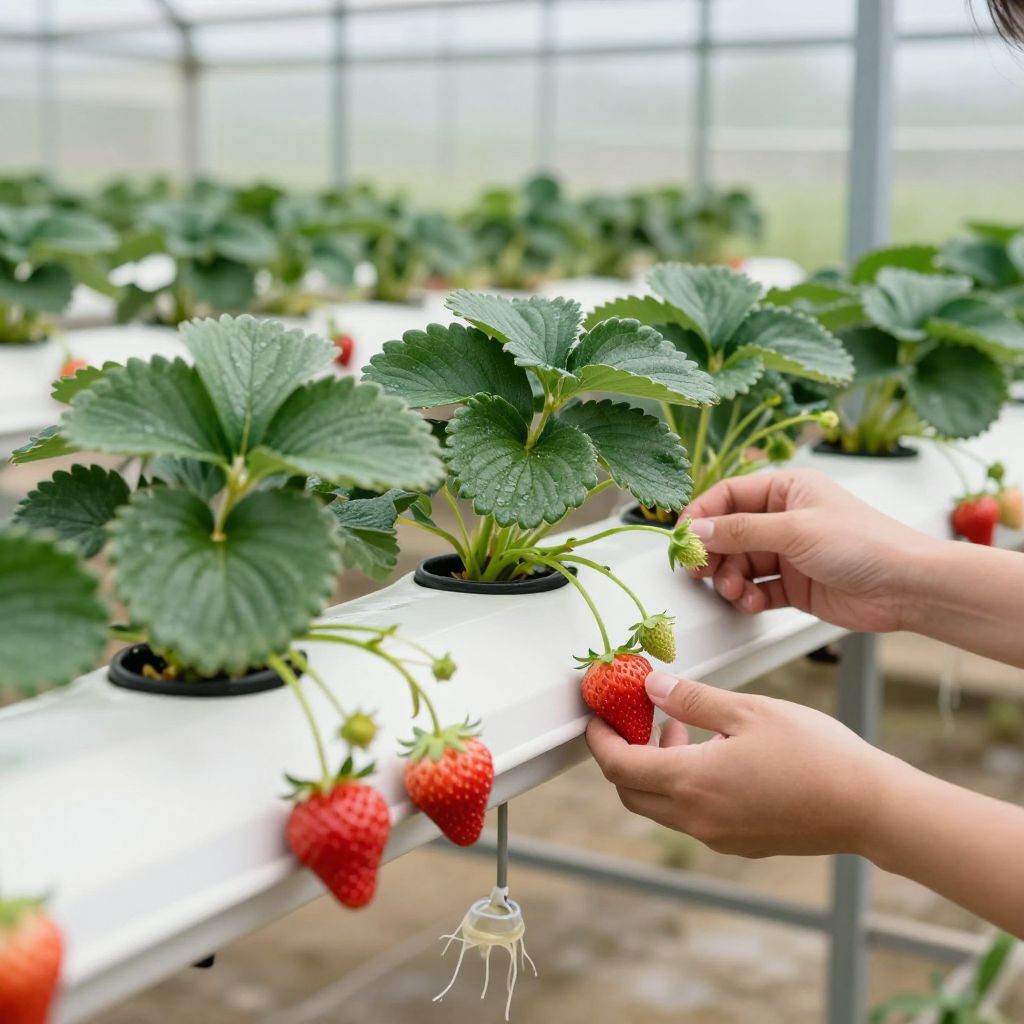
Are you wondering what is hydroponic strawberries and whether they’re a practical way to grow fruit at home? Hydroponic strawberries are strawberry plants grown without soil, with their roots fed by a nutrient-rich water solution instead. They can be grown indoors or in protected outdoor systems, and they often produce clean, manageable plants when light, moisture, and nutrients are kept in balance.
This method is popular with home gardeners who want better control over watering, fewer soil-borne diseases, and easier harvesting. It is not a “set it and forget it” system, though; strawberries need the right support, strong light, and regular monitoring to stay productive.
What is hydroponic strawberries?
Hydroponic strawberries are strawberry plants grown in a soilless system where roots take up water, oxygen, and nutrients from a prepared solution. Instead of soil, plants are supported in media such as coco coir, perlite, rockwool, or net pots, making it easier to control moisture, feeding, and root health.
How hydroponic strawberries work
Strawberries are naturally shallow-rooted, which makes them a good candidate for hydroponics. In a well-run system, the roots stay moist but not waterlogged, and the plant receives a steady supply of nutrients tailored to fruiting growth.
Common hydroponic system types
- Nutrient film technique (NFT): A thin stream of nutrient solution flows past the roots.
- Deep water culture (DWC): Roots hang into oxygenated nutrient water.
- Drip systems: Nutrient solution is delivered to each plant through small emitters.
- Ebb and flow: A tray is periodically flooded and drained, giving roots moisture and air.
For strawberries, drip systems and NFT are common because they can support multiple plants efficiently. The best choice depends on your space, budget, and how much monitoring you’re willing to do.
Why grow strawberries hydroponically?
Hydroponic strawberries can be a smart option if you want cleaner fruit, fewer weeds, and more control over growing conditions. They can also work well in apartments, greenhouses, patios, or other places where in-ground gardening is limited.
Practical advantages
- No garden soil is needed.
- Water use can be more efficient than in open beds.
- Plants are easier to keep off the ground, which helps reduce rot and pest pressure.
- Harvesting is often easier because fruit hangs at a comfortable height.
Important limitations
- You must manage nutrients carefully.
- Plants need strong light, especially indoors.
- System failures can stress plants quickly.
- Pollination may need to be done by hand indoors or in enclosed spaces.
Best growing conditions for hydroponic strawberries
Strawberries need consistent light, moderate temperatures, and good air movement to fruit well. Exact conditions vary by cultivar and local climate, but the goal is always the same: keep the plant growing steadily without heat stress or root problems.
Light
Outdoors, strawberries usually perform best in full sun. Indoors, they need strong supplemental lighting because window light is rarely enough for reliable flowering and fruiting.
- Provide bright, direct light for most of the day.
- Use grow lights if natural light is weak or inconsistent.
- Keep lights close enough for intensity, but not so close that leaves scorch.
Temperature and airflow
Strawberries prefer moderate conditions. Excess heat can reduce flowering and fruit quality, while poor airflow can encourage fungal issues.
- Keep the growing area well ventilated.
- Avoid placing plants near hot vents or cold drafts.
- Use fans indoors to improve air movement around foliage.
Water and oxygen
Roots need both moisture and oxygen. If the root zone stays saturated too long, plants can decline quickly, even if the leaves still look green at first.
- Use a system that keeps roots moist but not submerged unless it is designed for that purpose.
- Make sure pumps, timers, and drains work reliably.
- Check for clogs and stagnant water regularly.
How to start hydroponic strawberries
Starting strawberries in hydroponics is straightforward if you begin with healthy plants and a stable system. You can use young transplants, runners, or plugs suited to soilless culture, but avoid weak or diseased stock.
- Choose a system. Pick NFT, drip, DWC, or another setup that fits your space and maintenance level.
- Select healthy plants. Use disease-free strawberry starts with firm crowns and clean roots.
- Choose a growing medium. Common options include coco coir, perlite, rockwool, or a blend that holds moisture while allowing air flow.
- Set up support. Place plants so the crown stays above the medium and the roots can spread freely.
- Mix nutrients carefully. Use a hydroponic nutrient solution made for fruiting plants and follow the product label.
- Monitor pH and system health. Keep an eye on water quality, pump function, and root condition.
Do not bury the crown. The crown is the central growing point of the strawberry plant, and covering it can lead to rot and poor growth.
Plant care and maintenance
Hydroponic strawberries need regular observation. Small problems can become bigger quickly because the plants depend entirely on the system you provide.
Nutrient management
Strawberries need balanced nutrition to support leaves, flowers, and fruit. Too much nitrogen can produce lush foliage with fewer berries, while weak feeding can stunt growth and reduce flowering.
- Use a nutrient mix designed for hydroponic fruiting crops when possible.
- Adjust feeding based on plant stage, growth rate, and visible symptoms.
- Replace or refresh nutrient solution as needed to prevent imbalance.
pH and root health
Hydroponic strawberries usually perform best in a slightly acidic root zone. If pH drifts too far, the plant may struggle to absorb nutrients even when the solution contains enough food.
- Test pH regularly with a meter or test kit.
- Watch for pale leaves, weak growth, or poor fruiting, which can signal nutrient uptake issues.
- Keep roots white or cream-colored when healthy; brown, slimy roots suggest trouble.
Pruning and runner control
Strawberries naturally produce runners, but in hydroponics, too many runners can drain energy away from fruit production. Pruning helps the plant focus on flowers and berries.
- Remove damaged or yellowing leaves.
- Trim excess runners if your goal is fruit, not propagation.
- Keep the center of the plant open for airflow and easier inspection.
Pollination and fruit set
Strawberries need good pollination for well-shaped fruit. Outdoors, insects and wind often help. Indoors or in enclosed systems, you may need to assist pollination yourself.
How to pollinate indoors
- Gently brush the flowers with a small soft brush.
- Use a fan on low to move air around the blooms.
- Repeat during the flowering period for better fruit set.
Poor pollination can cause misshapen berries with uneven development. If fruit looks lopsided, pollination is often the first thing to check.
Common pests and diseases
Hydroponic systems reduce some soil-related problems, but they do not eliminate pests or disease. Regular inspection is still essential.
Common pests
- Aphids
- Spider mites
- Thrips
- Whiteflies
Check leaf undersides and flower clusters often. Early infestations are easier to manage with physical removal, insecticidal soap, or other appropriate controls for your setup.
Common diseases and disorders
- Root rot: Often caused by poor oxygenation, warm stagnant water, or overwatering in the wrong system.
- Powdery mildew: More likely when air is still and humidity is high.
- Leaf spotting: Can result from wet foliage, poor airflow, or infected plant material.
To reduce disease risk, start with clean plants, sanitize tools and containers, and remove dead leaves before they decay in the system.
Harvesting hydroponic strawberries
Harvest berries when they are fully colored and fragrant. Strawberries do not continue to ripen much after picking, so wait until the fruit looks ready on the plant.
- Pick gently to avoid bruising the fruit.
- Harvest in the cool part of the day when possible.
- Remove overripe or damaged berries promptly to discourage pests and mold.
If you are growing for flavor, remember that balanced light and steady plant health usually matter more than pushing the system harder. Stress often reduces berry quality.
Common mistakes to avoid
Many beginner problems come from treating hydroponic strawberries like houseplants instead of fruiting crops with active needs.
- Overcrowding plants: Crowded crowns trap moisture and reduce airflow.
- Ignoring pH: Nutrients can be present but unavailable if pH is off.
- Using weak light: Poor light leads to spindly growth and low fruiting.
- Letting roots sit in stagnant water: This invites rot and oxygen stress.
- Leaving runners unchecked: The plant may prioritize spreading over producing berries.
Is hydroponic strawberry growing right for you?
Hydroponic strawberries are a good fit if you want a controlled, compact way to grow fruit and you are willing to monitor the system regularly. They suit indoor gardeners, greenhouse growers, and anyone who wants to avoid soil-related issues, but they do require more attention than a simple pot on a patio.
If you are deciding whether to try them, start small with a few healthy plants and a system you can inspect easily. Once you understand how your local light, temperature, and water conditions affect the crop, you can expand with more confidence. For more growing ideas, you may also find can you grow strawberries indoors useful.