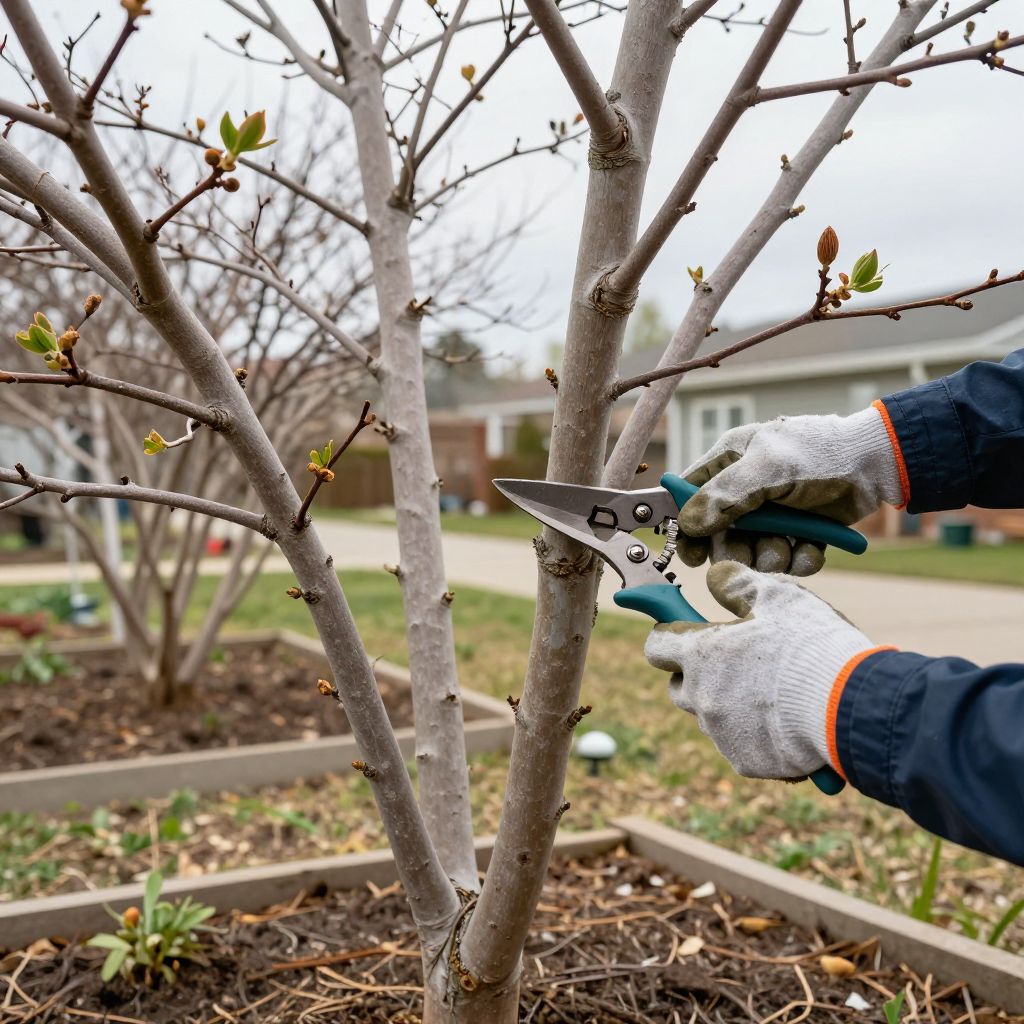
Wondering when to trim crepe myrtle without ruining the flowers or the plant’s shape? The best time is usually late winter to very early spring, before new growth starts. That timing lets you see the branch structure clearly and reduces the chance of cutting off the season’s flower buds.
Crepe myrtles respond best to light, thoughtful pruning rather than hard cutting. If you trim at the wrong time or remove too much wood, you can delay bloom, trigger weak growth, and create an awkward shape that takes years to correct.
When to trim crepe myrtle?
The best time to trim crepe myrtle is late winter to early spring, while the plant is still dormant and before buds swell. In most climates, that means after the coldest weather has passed but before active growth begins. Avoid heavy pruning in fall, which can encourage tender new shoots that may be damaged by frost.
Why timing matters for crepe myrtle pruning
Crepe myrtles bloom on new wood, so pruning just before spring growth gives the plant time to produce fresh flowering shoots. If you prune too early in fall or too late after growth has started, you can reduce bloom potential and stress the shrub or tree.
What happens if you prune at the wrong time?
- Fall pruning can stimulate soft new growth that is vulnerable to cold damage.
- Late spring pruning may remove developing flower buds and shorten the bloom season.
- Heavy summer pruning can force a flush of weak shoots instead of a balanced canopy.
How much should you trim?
For most crepe myrtles, the goal is selective pruning, not drastic cutting. Remove dead, crossing, rubbing, or inward-growing branches first. Then thin crowded stems and shape the plant lightly so sunlight and air can move through the canopy.
Important: Avoid topping, also called “crepe murder,” where the main stems are cut back to stubs. This creates a flush of weak, upright growth, can spoil the natural form, and often leads to more maintenance later.
Recommended pruning approach
- Start with dead, damaged, or diseased wood.
- Remove suckers from the base and any shoots growing from the trunk below the canopy.
- Thin out branches that cross or crowd the center.
- Shorten overly long shoots by cutting back to a side branch or outward-facing bud.
- Step back often and keep the natural vase or multi-stem form.
Best pruning timing by season
Late winter to early spring
This is the main pruning window for most gardeners. The plant is dormant, the branch structure is visible, and you can make clean cuts before the growth season begins. In colder regions, wait until the risk of severe freezes has mostly passed.
Summer
Light cleanup is fine in summer if you see broken branches, storm damage, or suckers. You can also remove spent flower clusters if you want a tidier look, but avoid major cuts unless the plant is badly overgrown or damaged.
Fall
Fall is usually not the right time for trimming crepe myrtle. Even a moderate cut can encourage new growth that won’t harden before winter. In warm climates, minor cleanup may be acceptable, but it is still better to wait until late winter.
How to prune crepe myrtle step by step
Use clean, sharp tools and make deliberate cuts. Good pruning preserves the plant’s structure and helps prevent disease entry through torn stems.
Tools you may need
- Hand pruners for stems up to about 1/2 inch thick
- Loppers for thicker branches
- A pruning saw for larger limbs
- Rubbing alcohol or disinfectant for cleaning tools between plants
Step-by-step pruning method
- Inspect the plant from all sides before cutting.
- Remove dead wood by cutting back to healthy tissue.
- Cut out crossing branches and stems that rub together.
- Eliminate weak shoots growing toward the center.
- Reduce height only where needed, cutting to a side branch rather than leaving stubs.
- Do not remove more than necessary in one season.
How to tell if your crepe myrtle needs pruning
Not every crepe myrtle needs annual pruning. Many plants look better and bloom well with only light maintenance. Prune if you see crowding, dead growth, awkward branching, or stems that are too tall for the space.
Signs pruning is useful
- Branches are crossing or rubbing
- The center of the plant is too dense
- Dead tips or winter-damaged wood are present
- Suckers are emerging from the base or trunk
- The plant is outgrowing its site
Signs you should leave it alone
- The plant has a balanced shape
- There is little dead or damaged wood
- Flowering has been good in recent seasons
- The plant is still young and establishing
Common crepe myrtle pruning mistakes
Most pruning problems come from cutting too much or cutting at the wrong point. A few simple habits can help you avoid long-term damage.
- Topping the plant instead of thinning or shortening selectively.
- Leaving stubs that die back and invite decay.
- Pruning too late in spring after growth has already begun.
- Removing too many lower branches and creating a bare, unnatural trunk.
- Ignoring suckers that drain energy from the main framework.
What to do with overgrown crepe myrtle
If your crepe myrtle has been neglected for years, resist the urge to fix everything in one season. Severe renovation pruning can shock the plant and produce a mass of weak shoots. Instead, spread corrective pruning over two or three late-winter seasons.
Safer renovation strategy
- Remove dead and damaged wood first.
- Choose a few of the worst crossing or crowded stems to remove.
- Keep the strongest, best-placed trunks.
- Repeat the process the following late winter if more correction is needed.
This gradual approach is especially helpful for older shrubs and tree-form crepe myrtles that have been heavily cut before. It preserves more flowering wood and reduces stress.
Pruning young crepe myrtles vs. mature plants
Young plants
Newly planted crepe myrtles need time to establish roots. In the first year or two, focus on removing only broken, crossing, or poorly placed stems. Too much pruning early on can slow establishment and reduce vigor.
Mature plants
Established plants can handle selective thinning and shaping more easily. Mature crepe myrtles often benefit from removing suckers, opening the canopy, and keeping the overall size appropriate for the site.
After pruning care
Crepe myrtles usually recover well after proper pruning, but they still benefit from basic care. Water during dry spells, especially if the plant is newly planted or recovering from a larger cut. Keep mulch a few inches away from the trunk to avoid excess moisture against the bark.
If the plant is in poor soil, a light topdressing of compost in spring can help improve soil structure over time. Avoid piling compost or mulch against the trunk, and do not overfertilize, since excessive nitrogen can push weak leafy growth at the expense of flowers.
Problems to watch for after trimming
Most crepe myrtles bounce back well, but stress, pests, or disease can show up after pruning if the plant was cut too hard or at the wrong time.
- Weak, leafy shoots may indicate the plant was topped or overpruned.
- Dieback at cut points can happen if cuts were made poorly or in severe weather.
- Powdery mildew is more likely in crowded, poorly ventilated plants.
- Aphids may feed on tender new growth and cause sticky leaves or sooty mold.
Improving airflow, pruning correctly, and avoiding excess nitrogen are usually the best preventive steps. If disease or pest pressure is persistent, inspect the plant regularly and remove affected growth promptly.
Quick answer: the best pruning rule to remember
Trim crepe myrtle in late winter to early spring, before new growth starts. Keep cuts selective and modest, and avoid topping. If you want a healthier plant with better bloom, focus on thinning crowded stems and preserving the natural shape.
If you want to keep learning about shrub and small-tree care, you may also enjoy reading more about seasonal pruning basics and how to shape flowering shrubs correctly.