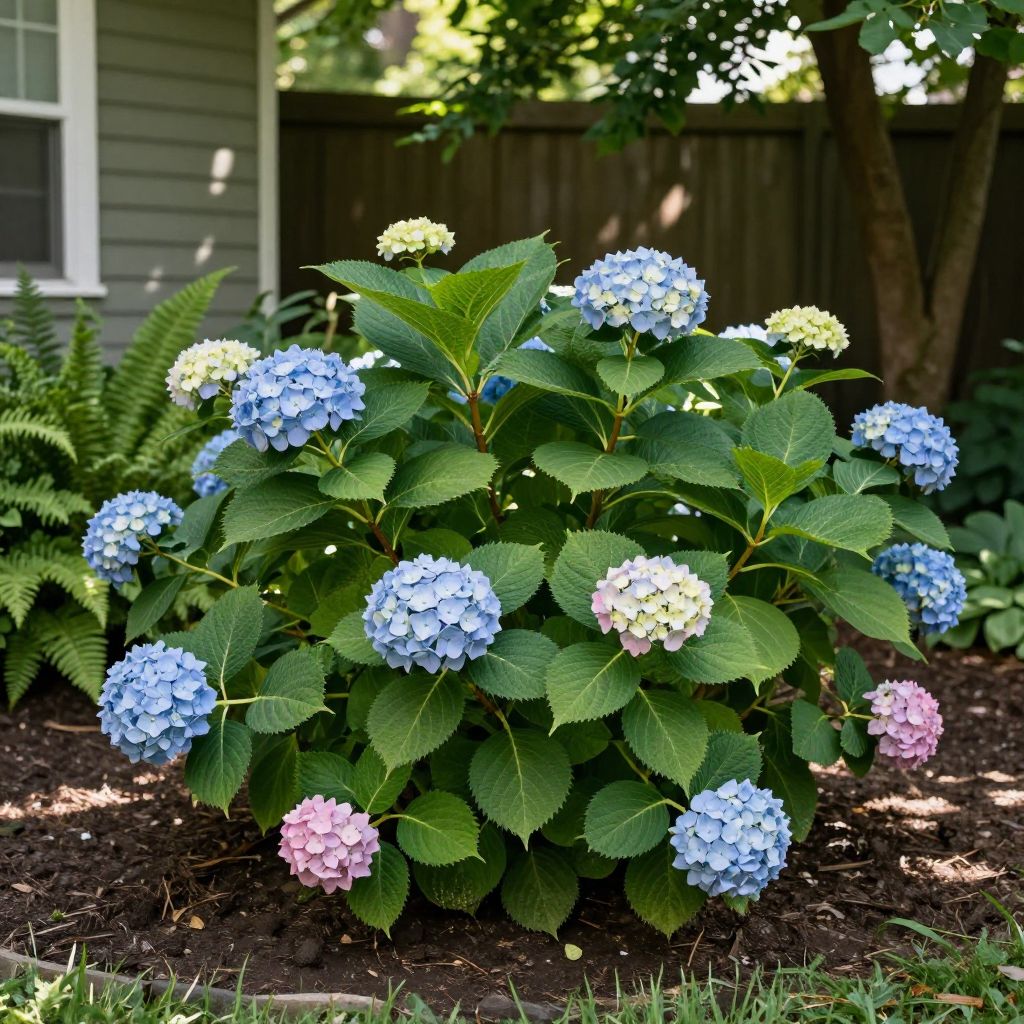
Can hydrangeas grow in shade? Yes, many hydrangeas can grow well in partial shade, and some actually prefer protection from hot afternoon sun. The key is matching the type of hydrangea to the amount of light you have and giving it rich, evenly moist, well-drained soil.
If your garden is mostly shaded, you can still enjoy hydrangea flowers, but bloom quantity and plant shape will depend on the light level. Too much shade often means fewer blooms and leggier growth, while bright filtered light usually gives the best balance of health and flowering.
Can hydrangeas grow in shade?
Yes, hydrangeas can grow in shade, especially morning sun with afternoon shade or bright dappled light under open trees. Most hydrangeas bloom best with several hours of light, but they are generally more shade-tolerant than many flowering shrubs. Deep shade usually reduces flowering and can make stems stretch toward the light.
How much shade is too much?
Not all shade is equal. Hydrangeas usually perform best in partial shade, where they receive some direct sun or strong indirect light during the day.
Light conditions, from best to worst
- Best: Morning sun and afternoon shade
- Good: Bright, filtered shade with a few hours of sun
- Fair: Light shade from open trees or a porch edge
- Poor: Dense shade all day, especially under thick evergreens or beside north-facing walls in cool climates
If your hydrangea gets less than about 3 hours of direct sun, expect fewer blooms on many varieties. In very hot climates, however, a little less sun can be helpful because harsh afternoon light can scorch leaves and flowers.
Which hydrangeas handle shade best?
Some hydrangea types are more forgiving in shade than others. If your site is not very sunny, choose a variety known for tolerating lower light rather than forcing a sun-loving type into a dark corner.
Shade-tolerant hydrangea types
- Bigleaf hydrangea (Hydrangea macrophylla) — often does well in partial shade and is a classic choice for woodland gardens.
- Mountain hydrangea (Hydrangea serrata) — similar to bigleaf hydrangea, often suited to cooler, lightly shaded sites.
- Oakleaf hydrangea (Hydrangea quercifolia) — tolerates shade well and adds attractive foliage, with flowers that can be less dependent on strong sun.
Panicle hydrangea (Hydrangea paniculata) usually flowers best with more sun than the others, though it can still grow in light shade. Smooth hydrangea (Hydrangea arborescens) can also handle part shade, but it generally blooms more heavily with brighter light.
What hydrangeas need in shady spots
Shade changes how a hydrangea uses water, light, and nutrients. In lower light, growth is slower, so the plant needs careful soil preparation and good drainage more than heavy feeding.
Soil and drainage
Hydrangeas like soil that holds moisture but does not stay soggy. Aim for soil rich in organic matter, such as compost, leaf mold, or well-rotted manure, mixed into the planting area.
- Work compost into the top 8 to 12 inches of soil before planting.
- Use mulch to help keep roots cool and evenly moist.
- Avoid planting in spots where water pools after rain.
In shade, soil often stays wetter for longer, so drainage matters even more. If the ground is heavy clay, raised beds or a slightly mounded planting area can help prevent root problems.
Watering in shade
Shady hydrangeas usually need less frequent watering than plants in full sun, but they still dislike drying out. Check the soil with your finger rather than watering on a fixed schedule.
- Water when the top inch of soil feels dry.
- Water deeply so moisture reaches the root zone.
- Reduce watering during cool, rainy periods.
Overwatering is a common mistake in shade. Because the soil dries more slowly, roots can suffer if the area stays wet for too long.
How to plant hydrangeas in a shady garden
Planting correctly gives your hydrangea the best chance to flower well in lower light. Choose the brightest shady spot you have, then improve the soil before planting.
- Choose a site with bright shade or morning sun.
- Dig a hole as deep as the root ball and about 2 times as wide.
- Loosen compacted soil around the hole.
- Mix compost into the removed soil if needed.
- Set the plant so the top of the root ball sits level with the soil surface.
- Backfill, water thoroughly, and add 2 to 3 inches of mulch.
Keep mulch a few inches away from the stems to reduce rot. In shady areas, mulch is especially useful because it helps stabilize soil moisture and temperature.
How to get better blooms in shade
If your hydrangea is healthy but not flowering well, the problem is often light, pruning, or too much nitrogen. A few adjustments can make a big difference.
Improve light without moving the plant
- Prune nearby shrubs or tree limbs that block all daylight.
- Remove competing groundcovers that crowd the base.
- Reflect light with pale walls, fences, or nearby hardscape if possible.
Feed lightly, not heavily
Too much fertilizer can push leafy growth at the expense of blooms, especially in shade. Use compost as your first soil amendment and only fertilize if the plant shows weak growth or the soil is clearly poor.
If you do fertilize, follow the product label and choose a balanced formulation suited to flowering shrubs. Avoid overfeeding late in the season, since tender new growth can be damaged by cold weather.
Prune at the right time
Pruning depends on the type of hydrangea. This matters even more in shade, because cutting at the wrong time can remove the buds that would have bloomed.
- Bigleaf and mountain hydrangeas: usually bloom on old wood, so avoid heavy pruning in late winter or spring.
- Panicle and smooth hydrangeas: bloom on new wood and can be pruned in late winter or early spring if needed.
- Oakleaf hydrangeas: usually need only light shaping after flowering.
If you are unsure which hydrangea you have, prune conservatively until you can identify the type. In shady gardens, preserving flower buds is especially important because the plant may already be producing fewer blooms.
Common problems with hydrangeas in shade
Shade can create a few predictable issues. Most are fixable once you know what to look for.
Leggy growth
Stems that stretch and lean usually mean the plant is reaching for more light. Move it to a brighter location if possible, or thin nearby shade sources.
Few or no flowers
This is often caused by too much shade, improper pruning, or a type of hydrangea that needs more sun. Check the plant’s light exposure first, then review pruning timing.
Leaf spots and mildew
Shady, humid conditions can encourage fungal issues, especially if air circulation is poor. Space plants properly, water at the base, and avoid wetting the foliage late in the day.
Root rot
When shade combines with heavy soil and overwatering, roots can decline. Improve drainage, reduce watering, and avoid planting in low spots where water collects.
Pests and diseases to watch for
Hydrangeas are not usually high-maintenance, but shaded plants can be more vulnerable if the site is damp and crowded. Keep an eye out for trouble early.
- Aphids: cluster on soft new growth and can be washed off with water.
- Spider mites: more common in dry conditions, though less likely in cool shade.
- Powdery mildew: appears as a white coating on leaves, often in humid, poorly ventilated spots.
- Leaf spot: causes brown or purple spotting, especially when leaves stay wet.
Good spacing, clean pruning tools, and watering at soil level go a long way toward prevention. Remove badly infected leaves and dispose of them rather than composting them if disease pressure is high.
Can hydrangeas grow in deep shade indoors or outdoors?
Outdoors, hydrangeas can tolerate shade if the light is still bright enough. Indoors, hydrangeas are generally not long-term houseplants because they need much more light than most indoor spaces provide.
If you are growing a potted hydrangea temporarily indoors, place it in the brightest cool spot available and keep the soil evenly moist. For lasting success, move it outdoors to a shaded patio, deck, or garden bed as soon as conditions allow.
Best uses for hydrangeas in shady landscapes
Hydrangeas are excellent for softening woodland edges, brightening foundation plantings, and adding structure to partially shaded borders. Their large leaves and rounded flower heads create a lush look even when bloom count is modest.
- Use them beneath tall deciduous trees with filtered light.
- Pair them with hostas, ferns, heucheras, and woodland perennials.
- Give them room to spread so air can move around the plant.
In very shady gardens, foliage quality may be just as valuable as flowers. Oakleaf hydrangea, in particular, can provide strong seasonal interest with leaves, blooms, and fall color.
Conclusion
Hydrangeas can grow in shade, but they need the right kind of shade: bright, open, and preferably with some morning sun. If you choose a shade-tolerant type, improve the soil, water carefully, and prune at the proper time, you can still enjoy healthy plants and good blooms.
For more help planning a low-light garden, you may also want to read about shade garden plants and how to prune hydrangeas.