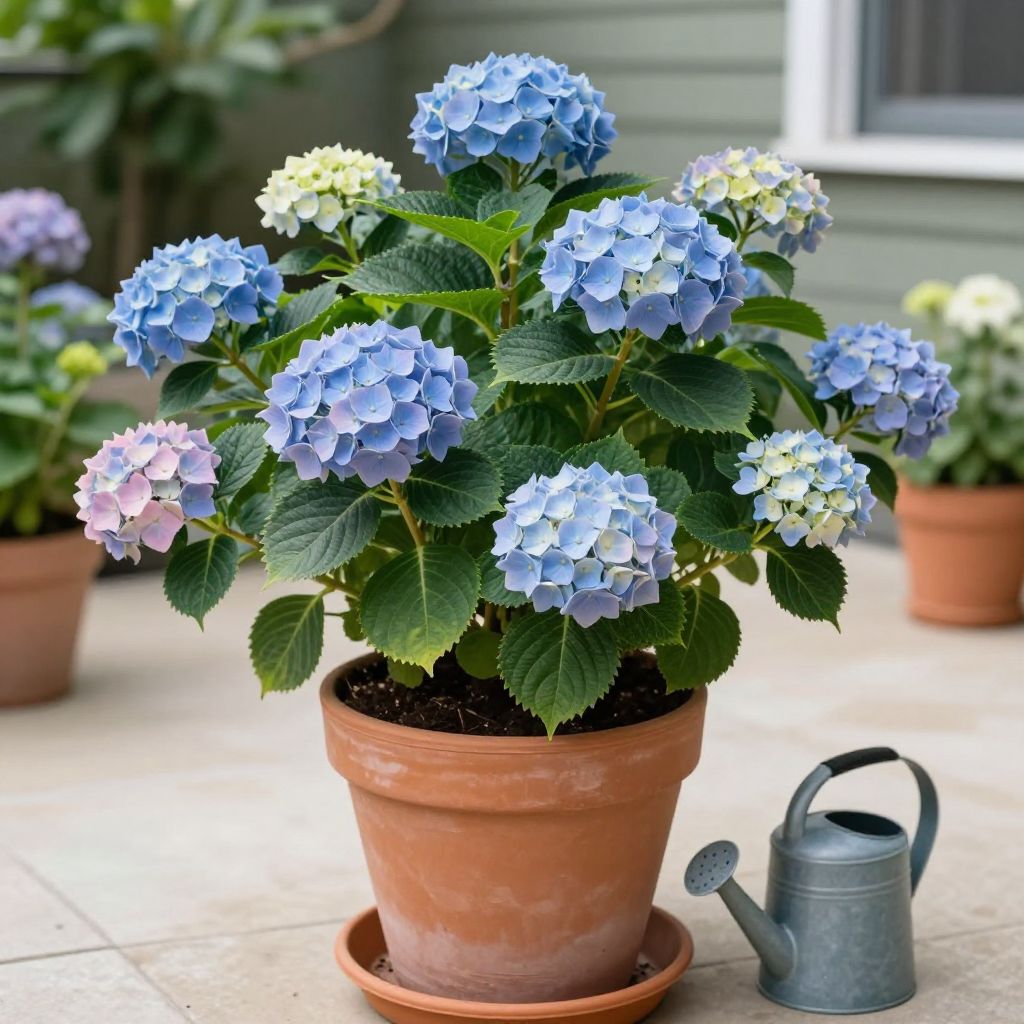
Can hydrangeas grow in pots? Yes, they can, and many gardeners do very well with them. Container-grown hydrangeas can be beautiful on patios, balconies, doorsteps, and small gardens, as long as you give them enough root space, steady moisture, and the right soil.
The main challenge is that pots dry out and heat up faster than garden beds, so potted hydrangeas need a little more attention. If you choose the right variety and keep up with watering, feeding, and pruning, you can enjoy healthy blooms in containers for many seasons.
Can hydrangeas grow in pots?
Yes, hydrangeas can grow in pots very successfully, especially compact varieties and younger plants. The keys are a large container with drainage, rich but free-draining soil, consistent watering, and enough light. Potted hydrangeas usually need more frequent care than in-ground plants because roots have less room and dry out faster.
Which hydrangeas do best in containers?
Not every hydrangea is equally suited to pot culture. Smaller, slower-growing types are easier to manage, while large shrubs can quickly outgrow a container.
Good container candidates
- Bigleaf hydrangea (Hydrangea macrophylla) compact forms, often sold for patios and porches.
- Mountain hydrangea (Hydrangea serrata) usually smaller and well suited to pots.
- Panicle hydrangea (Hydrangea paniculata) dwarf or compact cultivars can work well in large containers.
Choose a plant with a naturally compact habit if possible. A vigorous shrub in a small pot will need constant root pruning or repotting, and it may bloom poorly once it becomes rootbound.
What to avoid
- Very large, fast-growing hydrangeas unless you have a very large container.
- Shallow decorative pots without drainage holes.
- Plants already stressed, wilted, or rootbound at the nursery.
Choosing the right pot
Container size matters more than many gardeners expect. Hydrangeas have substantial root systems, and small pots dry out too quickly for reliable growth.
- Start with a pot at least 45–60 cm wide and deep for a young plant.
- Use a container with several drainage holes.
- Heavier pots help prevent tipping in wind and dry out a little more slowly.
- Dark pots heat up more in full sun, which can stress roots in hot climates.
If you live somewhere hot and windy, a larger pot is usually better than a small one. The extra soil volume buffers moisture and temperature swings.
Best soil for potted hydrangeas
Hydrangeas like moisture-retentive soil, but they do not tolerate soggy roots. In pots, the ideal mix is rich, airy, and drains well while still holding enough water for the plant to use between waterings.
Use a quality potting mix, not garden soil
Garden soil is too heavy for containers and can compact around the roots. Instead, use a premium potting mix and improve it with organic matter if needed.
- Choose a peat-free or standard potting mix designed for containers.
- Mix in compost if the blend seems lean or fast-draining.
- Add a small amount of perlite or bark if the soil feels too dense.
Do not add rocks or gravel to the bottom of the pot. That does not improve drainage and can actually keep the root zone wetter.
How much sun do potted hydrangeas need?
Most hydrangeas grow best with morning sun and afternoon shade, especially in warmer climates. In cooler regions, they can take more sun if you keep the soil evenly moist.
Light guidelines by climate
- Cooler climates: 4 to 6 hours of sun may be fine.
- Hot climates: bright morning sun with protection from harsh afternoon heat is usually better.
- Very shady sites: plants may survive, but flowering often drops.
If leaves scorch or wilt in the afternoon even when the soil is moist, move the pot to a gentler spot. Container plants are easier to relocate than garden shrubs, which is one of their biggest advantages.
Watering potted hydrangeas
Watering is the most important part of container hydrangea care. Pots dry out faster than garden beds, and hydrangeas wilt quickly when the root ball dries too much.
How to water correctly
- Check the soil with your finger before watering.
- Water when the top 2 to 5 cm feels dry, depending on weather and pot size.
- Water thoroughly until excess runs from the drainage holes.
- Empty saucers so the pot does not sit in standing water.
In warm or windy weather, potted hydrangeas may need water more than once a day. In cool, cloudy weather, they may need much less. Let the plant and soil guide you rather than following a fixed schedule.
Signs of underwatering
- Leaves droop suddenly, especially in the afternoon.
- Flowers and buds wilt or crisp.
- The pot feels very light.
Signs of overwatering
- Leaves yellow and stay limp.
- The soil stays wet for days.
- Roots may smell sour or look brown and mushy.
If you are unsure, it is usually better to water deeply and then let the top layer dry slightly before watering again, rather than keeping the pot constantly soggy.
Feeding hydrangeas in pots
Container plants use up nutrients faster than garden plants because watering leaches food from the potting mix. Hydrangeas do best with moderate feeding, not heavy fertilizing.
- Use a balanced, slow-release fertilizer formulated for flowering shrubs or containers.
- Follow the label directions for container plants rather than guessing a stronger dose.
- Stop feeding late in the season if growth should be slowing in your climate.
Too much fertilizer can produce leafy growth with fewer flowers. It can also stress roots and make the plant more prone to drought damage.
Planting hydrangeas in a pot
Planting is straightforward, but a careful setup makes a big difference later. The goal is to give roots room without burying the crown too deeply.
Step-by-step planting
- Choose a pot with drainage holes and fill the bottom with fresh potting mix.
- Remove the hydrangea from its nursery container and loosen circling roots gently.
- Set the plant so the top of the root ball sits level with the new soil surface.
- Backfill with potting mix and firm lightly.
- Water thoroughly to settle the soil.
- Place the pot in its final site and monitor moisture closely for the first few weeks.
Do not bury the stems deeper than they were in the nursery pot. That can encourage rot and reduce airflow around the crown.
Pruning and deadheading in containers
Pruning depends on the hydrangea type, so identify your plant before you cut. Some hydrangeas bloom on old wood, while others bloom on new wood, and pruning at the wrong time can remove flower buds.
General pruning tips
- Remove dead, damaged, or weak stems anytime.
- Deadhead spent blooms if you want a tidier look.
- Avoid heavy pruning unless you know your hydrangea’s bloom habit.
For many bigleaf hydrangeas, the safest approach is light shaping after flowering or minimal pruning in spring. Panicle hydrangeas are usually more forgiving, but you should still avoid cutting blindly if you are unsure of the cultivar.
Repotting and root care
Hydrangeas in pots eventually need more space or a refresh of the potting mix. If roots circle the pot, water runs straight through, or flowering declines, it may be time to repot.
When to repot
- Every 2 to 3 years for many container plants, depending on growth rate.
- When roots fill the pot and the plant dries out very quickly.
- When the mix has broken down and no longer drains well.
You can move the plant into a slightly larger pot or root-prune and refresh the soil if you want to keep the same container. Either way, replace at least part of the old mix with fresh potting soil.
Common problems with potted hydrangeas
Most container hydrangea problems come down to water stress, heat, or poor drainage. Catching issues early makes recovery much easier.
Wilting leaves
Wilting often means the plant is too dry, but it can also happen in intense sun even when the soil is moist. Check the soil before assuming the plant needs more water.
Yellow leaves
Yellowing can come from overwatering, poor drainage, or nutrient depletion. If the soil stays wet, improve drainage and reduce watering frequency.
Poor flowering
Low bloom counts may be caused by too much shade, too much nitrogen, incorrect pruning, or a pot that is too small. A plant that is rootbound often focuses on survival rather than flowers.
Leaf scorch
Brown, crispy leaf edges usually point to sun and heat stress, especially in dark pots or exposed patios. Move the plant to gentler light and keep the soil evenly moist.
Pests and diseases to watch for
Container hydrangeas can still get the same pests and diseases as garden plants, though good airflow and clean potting mix help reduce risk.
- Aphids on tender new growth.
- Spider mites in hot, dry conditions.
- Powdery mildew where air circulation is poor.
- Root rot if the pot stays waterlogged.
Inspect leaves regularly, especially the undersides. If you spot pests early, a strong spray of water or a suitable garden treatment may be enough before the problem spreads.
Overwintering hydrangeas in pots
In cold climates, roots in containers are more exposed to freezing than roots in the ground. Potted hydrangeas often need extra winter protection, even if the plant is hardy in the landscape.
Winter protection ideas
- Move the pot to a sheltered spot out of harsh wind.
- Group pots together for insulation.
- Wrap the container with burlap, bubble wrap, or another insulating layer.
- Keep the soil slightly moist, not dry or waterlogged.
If your winters are severe, a pot may need to be placed in an unheated garage, shed, or other protected area, depending on the plant type and your local conditions. The exact strategy depends on your climate and the hydrangea cultivar.
Can hydrangeas stay in pots long term?
Yes, hydrangeas can live in containers long term if you keep repotting, refreshing the soil, and managing moisture. They are not truly “set and forget” plants, though. Over time, the pot becomes part of the plant’s growing environment, so care needs to stay consistent.
If you want a low-maintenance patio shrub, choose a compact hydrangea, use a large container, and place it where it gets morning sun and afternoon shade. Then monitor the soil closely during warm spells, because that is where most container failures begin.
For more container-growing ideas, you may also find it helpful to read about how to choose the right potting mix for flowering plants and basic pruning tips for hydrangeas.