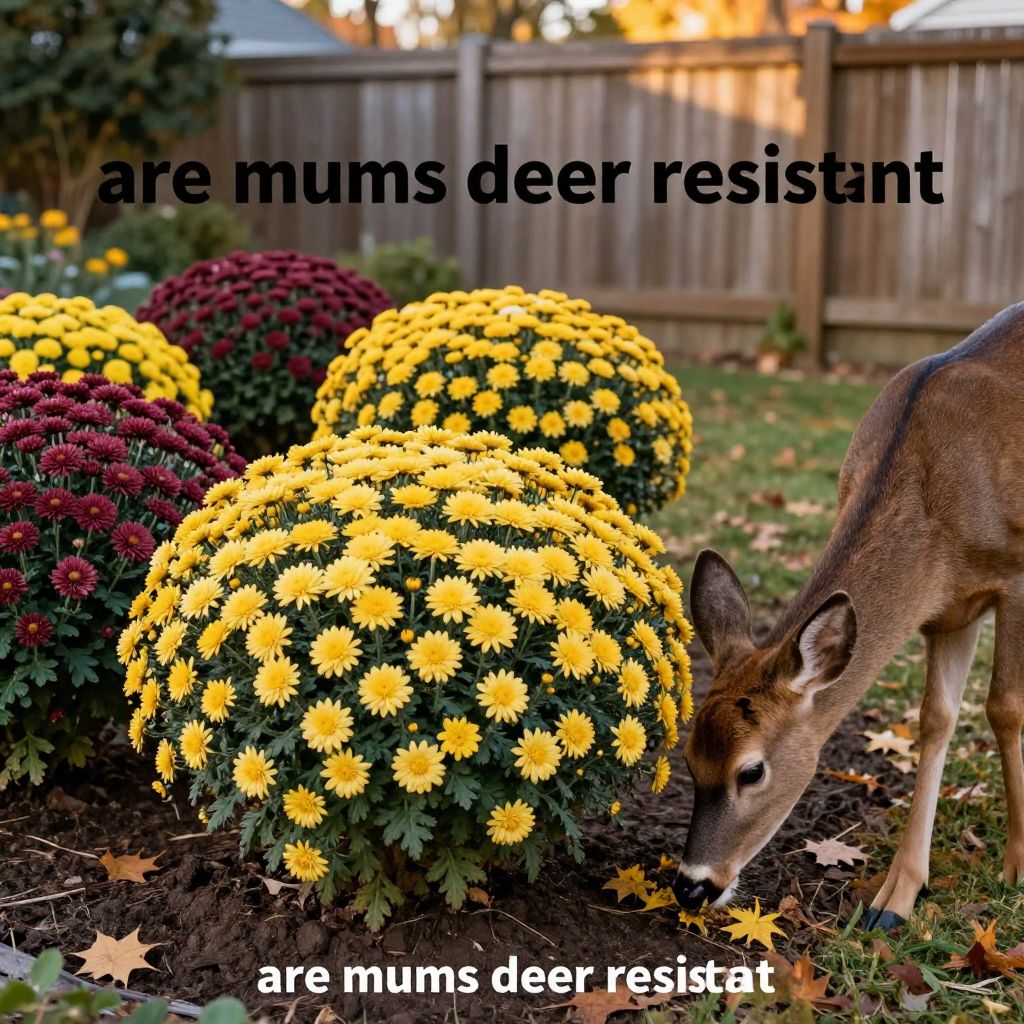
Are mums deer resistant? In many gardens, yes—chrysanthemums are usually considered deer resistant rather than deer proof. Deer often avoid them because of their scent and slightly bitter foliage, but hungry deer may still browse young plants, buds, or flowers when food is scarce.
If you want mums for fall color, it helps to know how deer behave, what makes plants more or less appealing, and how to protect your planting if deer pressure is high. The good news is that with the right site and a few simple defenses, mums can still be a reliable seasonal display.
Are mums deer resistant?
Mums are generally deer resistant, especially compared with tender annuals and many ornamentals, but they are not guaranteed to be ignored. Deer resistance depends on local food supply, plant age, weather, and how hungry the deer are. In short: mums are a lower-risk choice, not a foolproof one.
Why deer usually leave mums alone
Chrysanthemums, commonly called mums, tend to be less attractive to deer because of their aromatic foliage and somewhat coarse texture. Deer often prefer softer, sweeter, or more familiar plants first, especially in landscapes with lots of choice.
What makes a plant less appealing to deer?
- Strong scent from leaves and stems
- Bitter or coarse foliage
- Plants deer do not encounter often in their natural browse
- Thicker, tougher growth that is less palatable
That said, deer feeding is highly situational. A plant that is “resistant” in one yard may be eaten in another, especially during drought, winter, or heavy deer pressure.
When mums get damaged by deer
Even deer-resistant plants can be browsed when conditions change. Mums are most vulnerable when they are young, newly planted, or growing in exposed beds near deer travel routes.
Common situations that increase risk
- Gardens near woods, fields, or stream corridors
- Late season when natural forage is limited
- New transplants with tender growth
- Bud-heavy plants that deer may sample out of curiosity
- Yards where deer have become accustomed to ornamental plants
If deer are already feeding in your landscape, treat mums as a plant that may need backup protection.
How to grow mums so they stay healthy and less tempting
Healthy mums recover better from light browsing and are less likely to look stressed, which can make them more attractive to pests and wildlife. Give them the right growing conditions so they can put energy into sturdy stems and abundant blooms.
Best planting conditions for mums
- Sunlight: Full sun is best for strong flowering, though light afternoon shade can help in very hot climates.
- Soil: Well-drained soil is essential. Mums dislike soggy roots.
- pH and fertility: A moderately fertile garden soil with added compost usually works well.
- Air circulation: Good spacing helps reduce fungal disease.
Before planting, loosen the soil and mix in compost if your ground is heavy or poor. Avoid planting mums in low spots where water collects after rain.
Container-grown mums
Container mums can be easier to protect from deer because you can move them closer to a porch, patio, or entryway. Use a pot with drainage holes and a quality potting mix, not garden soil, so roots do not stay wet.
How to protect mums from deer
If deer visit your yard regularly, combine resistance with prevention. The most effective strategy is to make your mums less convenient and less appealing at the same time.
Practical deer protection methods
- Place mums near the house. Deer are less likely to browse plants close to human activity.
- Use physical barriers. Temporary fencing, netting, or decorative wire cages can work well around small beds or containers.
- Apply deer repellents. Use products labeled for deer deterrence and reapply as directed, especially after rain.
- Mix in less palatable plants. Surround mums with strongly scented or deer-resistant companions to reduce browsing pressure.
- Rotate protection methods. Deer can get used to one tactic, so changing repellents or moving barriers helps.
For the best results, start protection before deer discover the plants. Once deer learn a bed is easy to reach, they often return.
What not to rely on
- One-time spraying early in the season
- Very low fencing that deer can step over
- Assuming deer will ignore mums because they did last year
- Planting mums as the only “safe” plant in a highly browsed area
Watering and care tips for stronger mums
Mums need consistent moisture while establishing, but they do not like wet feet. Water deeply when the top inch or two of soil feels dry, then let excess water drain away.
Simple care routine
- Water at the base of the plant, not overhead, when possible.
- Mulch lightly to help hold moisture and reduce weeds.
- Remove faded flowers to keep the plant tidy and encourage continued blooming.
- Pinch back young plants earlier in the season if you want bushier growth, but stop pinching once buds begin forming.
Overwatering can weaken mums and lead to root problems, while drought stress can make them wilt and look unappealing. Aim for steady moisture, not constant saturation.
Common problems that look like deer damage
Not every missing leaf is caused by deer. Mums can also be affected by insects, disease, or weather damage, and the fix depends on the real cause.
How to tell if deer are the culprit
- Leaves or stems are torn, not neatly cut
- Browse is higher up, often at deer nose height
- Multiple plants are nibbled in the same pattern
- New growth disappears overnight
- Tracks or droppings are visible nearby
Other issues that can affect mums
- Aphids: Small clusters on new growth; rinse off or treat as needed.
- Powdery mildew: White coating on leaves, often worse with poor airflow.
- Root rot: Yellowing, wilting plants in wet soil.
- Heat stress: Drooping during hot afternoons, especially in containers.
If damage appears suddenly and the stems are stripped unevenly, deer are likely involved. If leaves are spotted, curled, or coated, look for pests or disease instead.
Best planting and maintenance choices for deer-prone gardens
In deer-heavy areas, place mums where they are easiest to monitor and protect. A well-placed plant is more likely to bloom well and less likely to become a snack.
Good placement ideas
- Near a front door, porch, or walkway
- In raised planters or containers
- Inside a fenced patio garden
- As part of a mixed border with other deer-resistant plants
If you use mums in a landscape bed, avoid putting them right on the edge of woods or open lawn where deer naturally travel. The closer they are to cover, the more likely they are to be sampled.
Can you propagate mums if deer damage them?
Yes, if a plant is healthy enough, you can often save and multiply mums through division or cuttings depending on the type and season. This is useful if deer have damaged a plant but not destroyed the root system.
When propagation makes sense
- The plant has several healthy stems left
- The crown is still firm and alive
- You want to replace a damaged plant next season
Do not try to propagate from weak, diseased, or severely browsed plants. Focus first on recovery, then divide or take cuttings when the plant is vigorous again.
Quick answers about mums and deer
Will deer eat mums every time?
No. Many deer avoid them, but hungry deer may still browse them, especially in late season or in heavily populated deer areas.
Are garden mums more deer resistant than other flowers?
Often yes. Their scent and texture make them less attractive than many tender ornamentals, but they are not immune.
What is the best protection for mums?
A combination of placement, fencing or netting, and a labeled deer repellent usually works better than any single method.
Conclusion: how to keep mums blooming with less deer damage
So, are mums deer resistant? Generally yes, but not completely. If deer pressure is light, mums may perform beautifully with little trouble. If deer are common in your area, give them a protected spot, keep the soil well drained, and use repellents or barriers before browsing starts.
For more help understanding what draws deer into the garden, you may also want to read what to feed deer so you can better anticipate their behavior around your landscape.