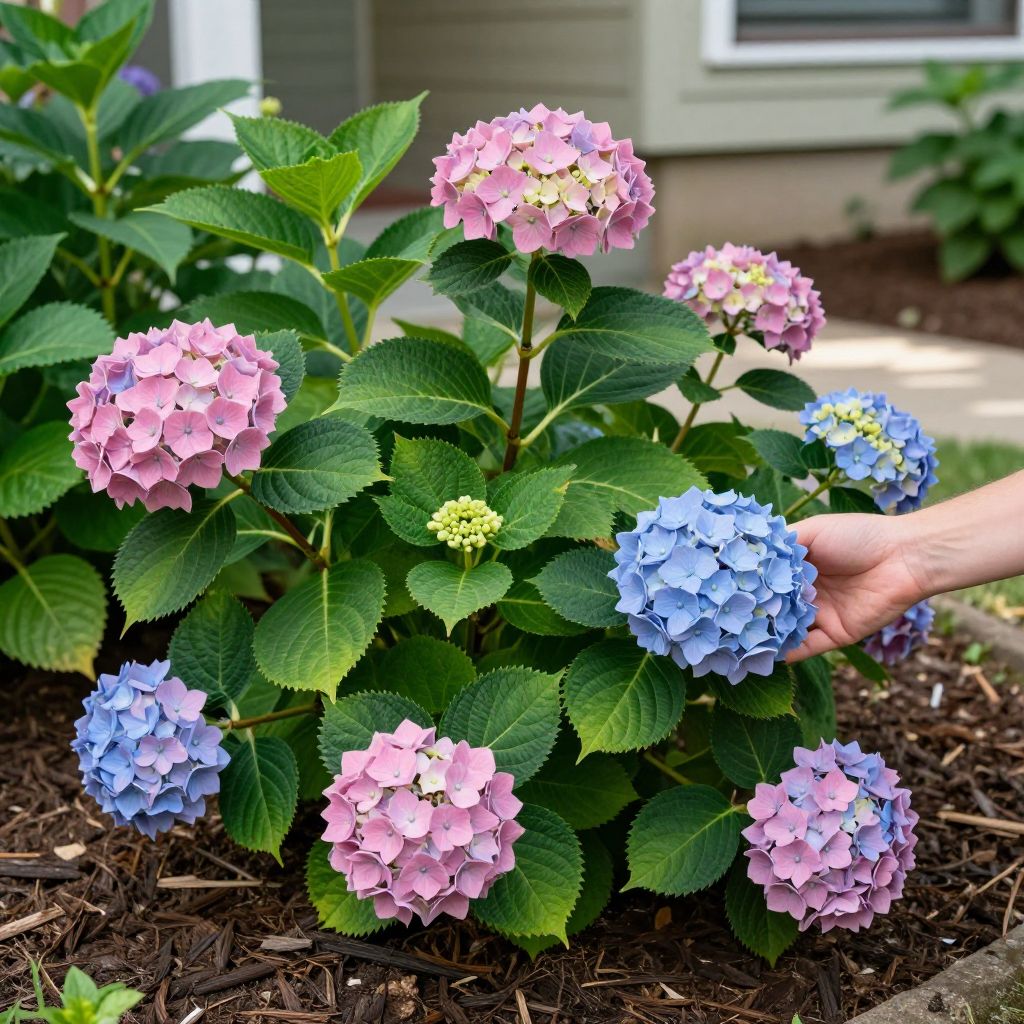
If you’re asking, “What type of hydrangea do I have?” you’re not alone. Hydrangeas can look similar at first glance, but the flower shape, leaf form, growth habit, and pruning behavior usually give you the answer.
Once you identify the type, you can prune at the right time, choose better care, and avoid the most common hydrangea mistakes. Here’s how to tell the main types apart and what to do next.
What type of hydrangea do I have?
The fastest way to identify your hydrangea is by its flower shape and how it blooms. Most garden hydrangeas fall into a few main groups: mophead or lacecap Hydrangea macrophylla, panicle hydrangea Hydrangea paniculata, smooth hydrangea Hydrangea arborescens, oakleaf hydrangea Hydrangea quercifolia, and climbing hydrangea Hydrangea anomala subsp. petiolaris. Each has distinct leaves, flowers, and pruning needs.
How to identify your hydrangea step by step
Start with the bloom, then check the leaves, stems, and growth habit. You usually do not need a plant tag to make a good identification.
- Look at the flower shape. Is it round and full, flat and airy, cone-shaped, or made of tiny flowers covering a vine?
- Check the leaves. Note the size, shape, texture, and whether the edges are smooth or deeply lobed.
- Observe the stems. Are they woody and upright, arching, or climbing with aerial roots?
- Watch when it blooms. Some hydrangeas flower on old wood, some on new wood, and some on both.
- Compare the plant’s overall size and shape. A compact shrub, a large mounded shrub, or a vine all point to different types.
1. Mophead hydrangea
Mophead hydrangeas have big, rounded flower clusters that look like pom-poms. They are usually Hydrangea macrophylla and often have broad, glossy leaves with serrated edges.
These are the classic pink, blue, or purple hydrangeas many gardeners recognize. Flower color may shift with soil conditions in some varieties, but not all cultivars respond strongly.
2. Lacecap hydrangea
Lacecap hydrangeas are also often Hydrangea macrophylla, but their blooms are flatter. They have a ring of showy outer florets around a center of tiny fertile flowers.
If your plant has a delicate, open flower head rather than a full ball, it is likely a lacecap type.
3. Panicle hydrangea
Panicle hydrangeas, Hydrangea paniculata, have cone-shaped flower clusters. The blooms often start white or creamy and may age to pink, green, or tan depending on the cultivar and weather.
The leaves are usually more pointed and less broad than those of mophead hydrangeas. Panicle hydrangeas tend to be more sun-tolerant and are often larger shrubs or small trees when trained.
4. Smooth hydrangea
Smooth hydrangeas, Hydrangea arborescens, usually have round flower heads, but the blooms are often looser and less dense than mopheads. A common example is the white-flowering type often sold in garden centers.
The plant has a softer, more open shrub form and typically produces flowers on new growth, which makes pruning simpler.
5. Oakleaf hydrangea
Oakleaf hydrangeas, Hydrangea quercifolia, are easy to spot by their deeply lobed leaves that resemble oak leaves. In fall, the foliage often turns rich red, burgundy, or bronze.
The flowers are usually cone-shaped and white to creamy white. This type is prized for both blooms and foliage, especially in landscapes with seasonal interest.
6. Climbing hydrangea
Climbing hydrangea is a vine, not a shrub. It clings to walls, fences, or tree trunks with aerial rootlets and produces flat clusters of white flowers.
If your hydrangea is growing upward against a structure rather than forming a shrub, you may have Hydrangea anomala subsp. petiolaris.
Quick comparison of common hydrangea types
If you are still unsure, this comparison can help narrow it down.
- Mophead: Round, dense flower balls; broad leaves; often blue, pink, or purple.
- Lacecap: Flat flower heads with a ring of larger florets around the center.
- Panicle: Cone-shaped blooms; more sun-tolerant; often white aging to pink.
- Smooth: Round but looser blooms; usually white; blooms on new wood.
- Oakleaf: Lobed, oak-like leaves; cone-shaped flowers; strong fall color.
- Climbing: Woody vine that climbs surfaces; flat white flower clusters.
Why identifying your hydrangea matters
Knowing the type helps you avoid pruning off next year’s flowers. It also tells you how much sun the plant can handle, how large it may get, and whether it needs special support or training.
The biggest mistake gardeners make is pruning at the wrong time. Some hydrangeas bloom on old wood, meaning flower buds form the previous season. Others bloom on new wood and can be cut back more freely.
Old wood vs. new wood bloomers
- Old wood bloomers: Many mophead and lacecap hydrangeas bloom on stems formed the previous year.
- New wood bloomers: Smooth and panicle hydrangeas usually bloom on current-season growth.
- Mixed or variable behavior: Some newer cultivars can bloom on both old and new wood, but you should still identify the plant before pruning heavily.
How to care for your hydrangea once you know the type
Basic care is similar across hydrangeas, but light, pruning, and moisture needs vary by type. Match care to the plant’s natural growth habit for the best results.
Sunlight
Most hydrangeas do best with morning sun and afternoon shade, especially in hot climates. Panicle hydrangeas usually tolerate more sun than mophead or lacecap types.
If leaves scorch, curl, or wilt in the afternoon, the plant may be getting too much direct heat. In cooler regions, more sun is often acceptable.
Soil and drainage
Hydrangeas prefer soil that holds moisture but drains well. Heavy clay can cause root stress if water sits around the roots, while very sandy soil may dry too quickly.
- Work in compost to improve soil structure.
- Avoid planting in low spots that stay soggy after rain.
- Mulch with 2 to 3 inches of organic material, keeping it away from the stems.
Watering
Hydrangeas like consistent moisture, especially during establishment and hot weather. Water deeply when the top few inches of soil begin to dry, rather than giving frequent shallow sprinkles.
Wilting in the afternoon does not always mean the plant needs water immediately, but repeated wilting, dry soil, and drooping leaves are signs to check moisture at root level.
Feeding
Use compost or a balanced, slow-release fertilizer if your soil is poor, but avoid overfeeding. Too much nitrogen can produce lots of leafy growth and fewer flowers.
If your hydrangea is healthy but not blooming, the problem is often pruning, shade, frost damage, or excess nitrogen rather than a lack of fertilizer.
Pruning based on hydrangea type
Pruning is where identification matters most. If you are unsure of the type, prune lightly until you are confident.
For mophead and lacecap hydrangeas
- Remove dead or damaged stems in early spring.
- After flowering, you can deadhead spent blooms if desired.
- Avoid hard pruning unless you know the plant blooms on new wood.
If these are cut back heavily in late winter, you may remove the buds that would have produced flowers.
For panicle and smooth hydrangeas
- Prune in late winter or early spring before strong new growth starts.
- Reduce stems to shape the shrub and encourage stronger flowering.
- Remove weak, crossing, or crowded stems.
These types are generally more forgiving, which makes them a good choice if you want a lower-maintenance hydrangea.
For oakleaf hydrangeas
Prune lightly after flowering if needed. Oakleaf hydrangeas often look best with minimal pruning, since they naturally develop an attractive form.
For climbing hydrangeas
Prune only to control size, remove dead wood, or guide the plant. Avoid frequent hard pruning, which can reduce flowering and disturb the plant’s structure.
Common hydrangea problems and what they mean
Once you know the type, you can read the plant’s symptoms more accurately. Many issues are environmental rather than caused by pests.
No flowers
- Pruned at the wrong time
- Too much shade
- Late frost damaged buds
- Excess nitrogen from fertilizer
- Plant is still young or recovering from stress
Brown leaf edges or scorched leaves
- Too much afternoon sun
- Inconsistent watering
- Wind exposure
- Salt stress near roads or sidewalks
Yellowing leaves
Yellow leaves can mean overwatering, poor drainage, compacted soil, or nutrient issues. Check the soil first before adding fertilizer.
Powdery mildew and leaf spots
These fungal issues are more likely in crowded plants with poor air circulation. Space plants properly, water at the base, and remove heavily affected leaves if needed.
Pests
Hydrangeas may occasionally attract aphids, spider mites, or Japanese beetles, depending on your region. Inspect the undersides of leaves and new growth regularly.
- Use a strong spray of water for light aphid infestations.
- Encourage airflow and avoid overhead watering to reduce fungal pressure.
- Hand-pick larger beetles when practical.
Can you change hydrangea flower color?
Only some hydrangeas change color, and soil pH is not the whole story. Many mophead hydrangeas can shift from pink to blue in more acidic soil, but genetics, aluminum availability, and cultivar choice all matter.
White-flowering types usually stay white. Panicle, smooth, oakleaf, and climbing hydrangeas do not typically change bloom color the way some mopheads do.
How to propagate hydrangeas
If you want more plants, softwood cuttings are a common way to propagate many hydrangeas in the growing season. The exact success rate depends on type, timing, and humidity.
- Take a healthy, non-flowering stem cutting.
- Remove the lower leaves.
- Place it in a moist, well-draining propagation mix.
- Keep humidity high and light indirect.
- Transplant only after roots are established.
Propagation is often easiest on vigorous shrubs that are actively growing but not stressed by heat or drought.
When to call it a mystery plant
If your hydrangea has no blooms yet, identification can be harder. In that case, look at leaf shape, stem texture, and growth habit through the season, then compare it once it flowers.
You can also take clear photos of the leaves, stems, and blooms and compare them with plant labels at a local nursery or extension service. That is often the fastest way to confirm the type.
Final takeaway
To answer “What type of hydrangea do I have?”, start with the flower shape, then confirm the leaf form and growth habit. Once you know whether it is mophead, lacecap, panicle, smooth, oakleaf, or climbing, you can prune correctly and give it the right care.
If you want to go further, compare your plant’s bloom type with local hydrangea care guides and pruning advice so you can match your routine to the exact shrub in your garden.