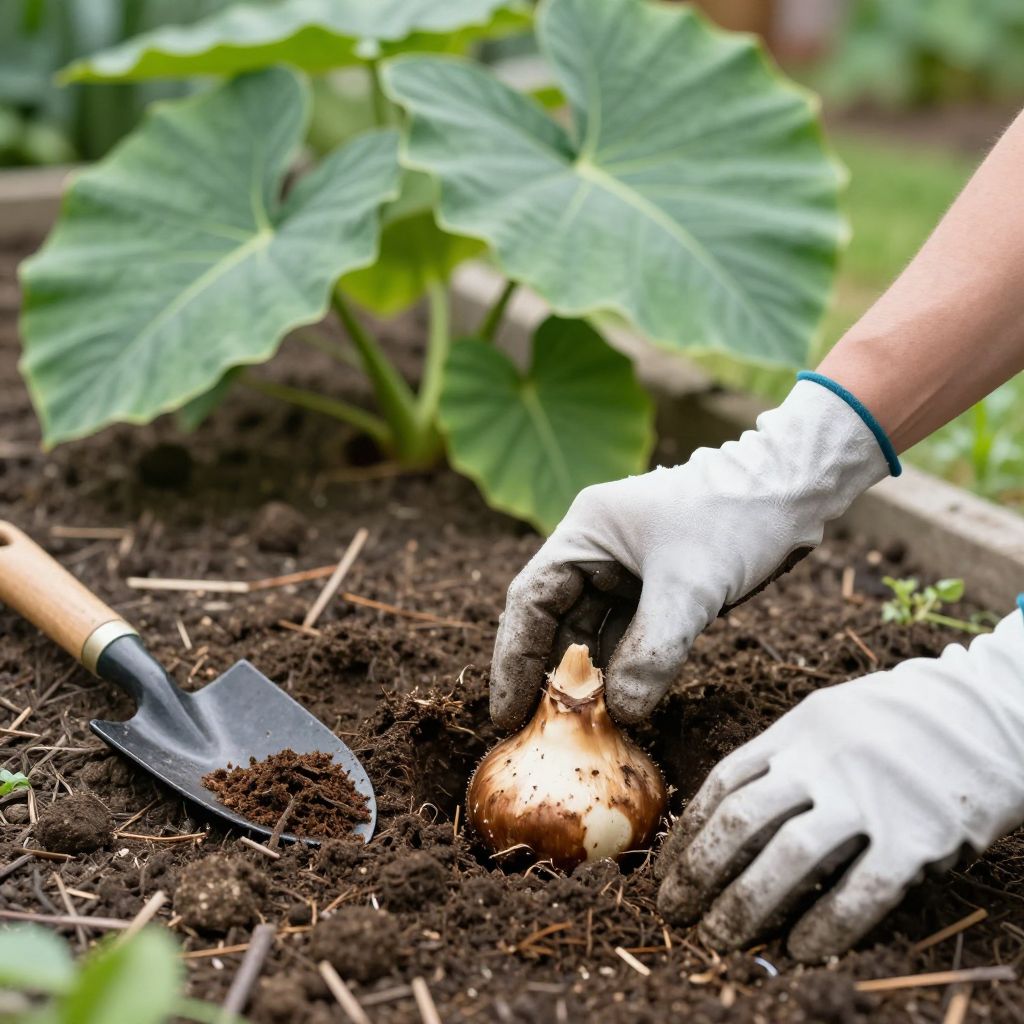
Wondering when to plant elephant ear bulbs so they sprout quickly and grow into big, dramatic leaves? Timing matters because elephant ears are warm-weather plants that dislike cold soil and frost. Planting too early can rot the corms or slow growth, while planting at the right time gives them a strong start.
The best planting window depends on your climate, but in most gardens you should wait until the soil has warmed and all danger of frost has passed. Whether you grow them in the ground or in containers, the goal is the same: warm soil, steady moisture, and a long enough season for lush growth.
When to plant elephant ear bulbs?
Plant elephant ear bulbs, more accurately corms or tubers, in spring after the last frost when soil temperatures stay above about 65°F (18°C). In colder climates, start them indoors a few weeks early or wait to plant outside until conditions are reliably warm. They need warmth to root and grow well.
What are elephant ears, exactly?
“Elephant ears” is a common name for large-leaved tropical plants such as Colocasia, Alocasia, and sometimes Xanthosoma. Gardeners usually plant the underground storage organ, often called a bulb, though it is often a corm or tuber rather than a true bulb.
That distinction matters less than the planting conditions, but it helps explain why these plants behave differently from tulips or daffodils. Elephant ears want warmth, moisture, and rich soil, and they respond poorly to cold, wet ground.
Best planting time by climate
Warm climates
If you garden in a mild or frost-free region, you can often plant elephant ear bulbs in early spring once the soil begins to warm. In very warm areas, some gardeners plant later in spring or even early summer and still get excellent growth.
Cooler climates
In colder regions, wait until nights are consistently mild and the soil is no longer chilly. A late frost can damage new shoots, and cold soil can cause the corm to sit without growing or to rot before it roots.
Indoor starts
If your growing season is short, you can start elephant ear bulbs indoors 4 to 6 weeks before your last expected frost. Use a pot with drainage, keep the mix lightly moist, and move the plant outside only after the weather is reliably warm.
How to tell if it is warm enough
The calendar is helpful, but the soil tells the real story. Elephant ears grow best when the ground is warm to the touch and daytime temperatures are consistently mild to warm. If you plant too early, growth may stall even if the bulb looks fine.
- Soil temperature: aim for at least 65°F (18°C), warmer if possible.
- Air temperature: frost-free nights are important.
- Soil condition: the bed should be workable, not cold and soggy.
If you do not have a soil thermometer, use a simple rule: plant when you would comfortably set out other heat-loving summer plants and when frost is no longer a concern.
How to plant elephant ear bulbs
Planting correctly helps the bulb wake up quickly and reduces rot. Choose a spot with rich soil and enough room for the plant to spread, because elephant ears can become large and dramatic in a single season.
- Choose a warm, sheltered location with morning sun and afternoon shade, or filtered light in hotter climates.
- Loosen the soil and mix in compost to improve fertility and moisture retention.
- Dig a hole deep enough to cover the corm by about 2 to 4 inches, depending on size and soil type.
- Place the corm with the growing point facing up if you can identify it.
- Backfill gently and water thoroughly to settle the soil.
- Keep the area evenly moist, but not waterlogged, while growth begins.
If you are unsure which end is up, plant the corm on its side. It will usually orient itself as it grows.
Soil, drainage, and compost
Elephant ears like fertile soil that holds moisture but still drains well. Heavy clay can work if you improve it with compost, while sandy soil may need more organic matter to stay evenly moist.
Good drainage is essential. The corm can rot in cold, saturated soil, especially before roots develop. If your planting area stays wet after rain, choose a raised bed or a container instead.
Best soil conditions
- Rich, loose garden soil
- Plenty of compost or well-rotted organic matter
- Consistent moisture without standing water
- Neutral to slightly acidic soil is usually fine
Sunlight and placement
Most elephant ears prefer partial shade, especially in hot climates, though some types tolerate more sun if they receive enough water. In cooler regions, more sun can help them grow faster, as long as the soil does not dry out.
Think about the plant’s mature size when choosing a site. Large leaves can catch wind, so a protected spot near a fence, wall, or larger planting can help prevent tearing and flopping.
Watering after planting
Elephant ears need steady moisture once they begin growing, but the corm should not sit in saturated soil before roots form. Water thoroughly after planting, then keep the soil evenly moist as shoots emerge.
After the plant is established, check the soil regularly. If the top inch begins to dry and the weather is warm, water again. Container plants dry out faster than in-ground plantings and may need more frequent attention.
Common watering mistakes
- Planting into cold, wet soil
- Letting young plants dry out completely
- Overwatering a dormant or newly planted corm
- Assuming all elephant ears need the same amount of water in every climate
Fertilizing for strong growth
Elephant ears are heavy feeders once they are growing well. Compost at planting time gives them a good start, and a balanced, slow-release fertilizer can support foliage growth if your soil is poor.
Do not overdo nitrogen, especially in containers. Too much can produce soft growth that is more prone to damage and may not perform as well in summer heat or wind.
Growing elephant ears in containers
Containers are a smart option if your climate is cool, your soil drains poorly, or you want to move the plant for better light. Use a large pot with drainage holes and a rich potting mix that holds moisture without becoming swampy.
- Choose a pot wide enough for the plant’s root system and top growth.
- Use a high-quality potting mix with compost if needed.
- Water more often than you would in the ground.
- Move the pot indoors or to shelter when temperatures drop.
Container-grown elephant ears often grow faster early in the season because the pot warms up sooner than garden soil. Just remember that pots also dry out and cool down faster.
What to do if you planted too early
If you planted before the weather warmed, do not panic. The corm may simply sit in the soil until conditions improve, but prolonged cold or wet weather increases the risk of rot.
If frost is forecast after planting, cover the area with frost cloth or a light blanket overnight, then remove it in the morning. For containers, move the pot to a protected location until the weather settles.
Common problems and how to fix them
No sprouts after planting
Cold soil is the most common reason elephant ears delay growth. Other causes include rotting, planting too deep, or using a damaged corm. Wait for warmer weather first, then check whether the corm is firm rather than soft and mushy.
Yellowing leaves
Yellow leaves can signal too much water, poor drainage, or low fertility. If the soil stays wet for days, improve drainage or reduce watering. If the plant is actively growing and the soil is healthy, a light feeding may help.
Leaf scorch or tearing
Strong sun, wind, and dry soil can cause leaf edges to brown or tear. Move container plants to a more sheltered spot and keep moisture more consistent. In windy gardens, choose a protected planting site from the start.
Pests and diseases
Slugs, snails, aphids, and spider mites can sometimes bother elephant ears. Check the undersides of leaves and new growth regularly, especially in warm, humid weather. Good spacing, airflow, and careful watering help reduce disease pressure.
Overwintering and lifting bulbs
In climates with frost, many gardeners dig up elephant ear bulbs for winter storage. Wait until the foliage begins to yellow after cool weather, then lift the corm carefully and let it dry before storing it in a cool, dry place.
In frost-free areas, you may be able to leave them in the ground year-round, but mulch and drainage still matter. If your soil stays wet in winter, lifting and storing may be safer than leaving them outside.
Quick planting checklist
- Wait until frost danger has passed
- Make sure soil is warm, ideally above 65°F (18°C)
- Use rich, well-drained soil
- Plant 2 to 4 inches deep
- Water after planting, then keep soil evenly moist
- Protect young plants from cold snaps and wind
Conclusion
The best time to plant elephant ear bulbs is in spring, after frost, when the soil has warmed enough for active growth. If you match planting time to your local climate and give the corm warm, moist, well-drained conditions, you will give it the best chance to produce big, bold leaves.
For more practical planting guidance, you may also want to read about growing elephant ears in the garden and overwintering tender bulbs.