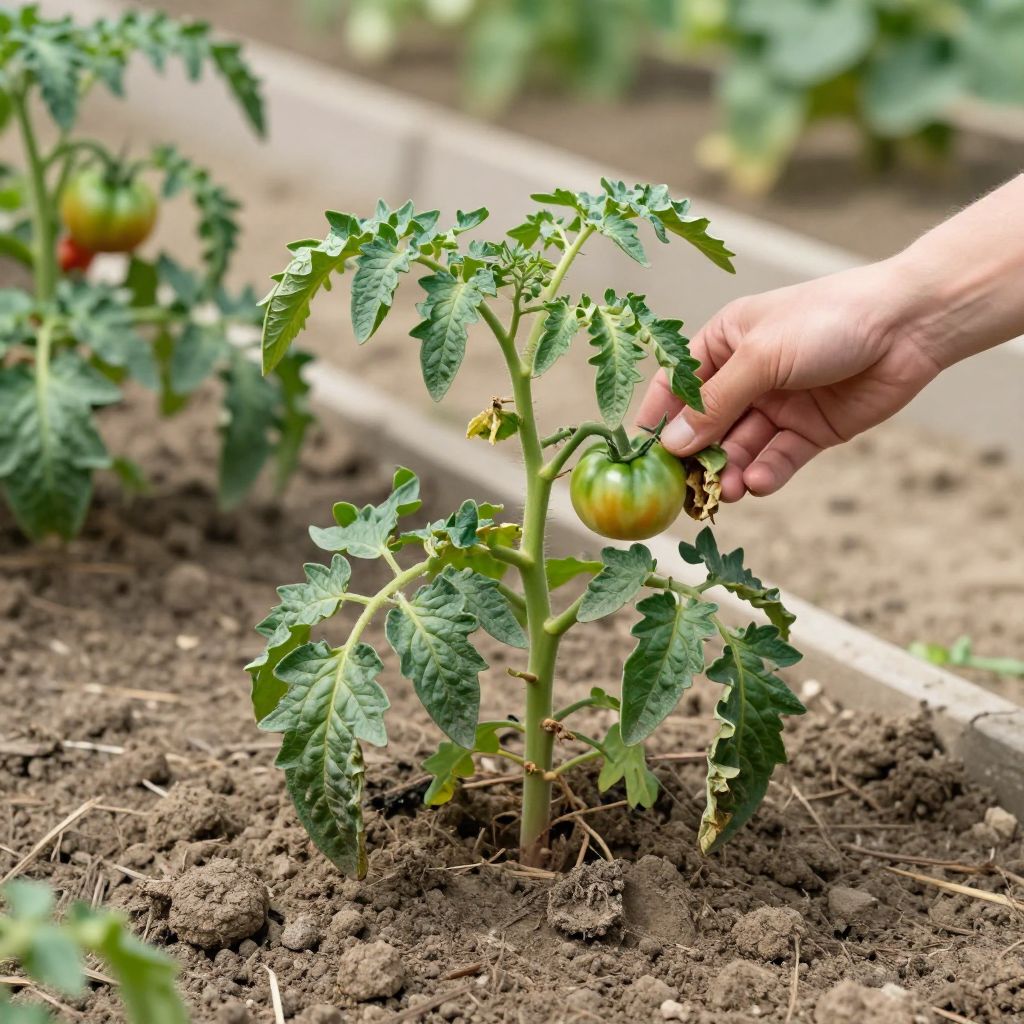
Why is my tomato plant wilting? In most cases, wilting means the plant can’t move enough water from the roots to the leaves, or something is damaging the roots, stems, or vascular tissue. The cause may be simple heat stress and underwatering, but it can also be a sign of root rot, pests, or a serious wilt disease.
The key is to look closely at the soil, stems, and leaves before you water or prune. A few quick checks can tell you whether your tomato needs a drink, better drainage, pest control, or removal to protect nearby plants.
Why is my tomato plant wilting?
Tomato plants wilt when water uptake is interrupted or the plant is losing water faster than it can absorb it. Common causes include dry soil, heat, transplant shock, root damage, overwatering, fungal wilt diseases, and insect or stem injury. The right fix depends on whether the wilt improves overnight, the soil is wet or dry, and whether only part of the plant is affected.
Common causes of tomato wilting and how to tell them apart
1. Underwatering or heat stress
Tomatoes need consistent moisture, especially during flowering and fruiting. In hot weather, a plant may droop in the afternoon even when the soil is only moderately dry.
- Leaves and stems look limp, but the plant may recover by evening or the next morning.
- The top few inches of soil feel dry.
- Potted tomatoes dry out faster than in-ground plants.
What to do: Water deeply at the base so moisture reaches the root zone. Aim to soak the soil, not just the surface. Add mulch 2–3 inches deep around the plant, keeping it a few inches away from the stem, to slow evaporation.
2. Overwatering and poor drainage
Too much water can cause the same drooping look as drought because roots need oxygen as well as moisture. If the soil stays soggy, roots may suffocate or begin to rot.
- Soil feels wet or sticky long after watering.
- Lower leaves may yellow before the plant wilts.
- Container plants may sit in saucers of water or have blocked drainage holes.
What to do: Let the top layer of soil dry slightly before watering again. Check that containers drain freely and that garden beds are not holding water after rain. If the site stays wet, improve drainage with raised beds, organic matter, or a better location.
3. Transplant shock
Newly transplanted tomatoes often droop for a few days while roots recover from being disturbed. This is common after planting seedlings into the garden or moving container-grown plants outdoors.
- Wilting starts soon after transplanting.
- Leaves may curl slightly, but stems are still firm.
- The plant may perk up overnight if conditions are mild.
What to do: Keep the soil evenly moist, but not waterlogged, for the first week or two. Shade young transplants from intense afternoon sun if temperatures are very high. Avoid heavy feeding until the plant resumes steady growth.
4. Root problems
Damaged roots cannot supply enough water to the top of the plant. Root issues may come from compacted soil, root rot, root-knot nematodes, or physical injury from cultivation.
- Wilting persists even when the soil is moist.
- The plant may be stunted or pale.
- Roots may look brown, soft, or knotted if you gently inspect them.
What to do: If root rot is suspected, improve drainage immediately and reduce watering. If nematodes or severe root damage are present, the plant may not recover well. Avoid replanting tomatoes in the same spot without soil improvement and rotation.
5. Fungal wilt diseases
Verticillium wilt and Fusarium wilt are soilborne diseases that block water movement inside the plant. They often cause one-sided wilting or yellowing that starts on lower leaves and moves upward.
- Leaves may yellow or brown on one side of the plant first.
- Stems can show brown discoloration when cut open.
- Wilting often worsens in warm weather, even when soil moisture is adequate.
What to do: Remove badly affected plants, especially if the wilt is spreading. Do not compost diseased tomato plants unless your compost system reaches and maintains high temperatures reliably. Rotate crops and choose resistant varieties when possible.
6. Bacterial wilt
Bacterial wilt can cause rapid collapse, often with little yellowing at first. It is more common in warm, humid regions and can spread through contaminated soil, tools, or infected transplants.
- Plants wilt quickly and may not recover overnight.
- Stems can look healthy outside but fail internally.
- Cut stems may ooze or show discoloration.
What to do: Remove infected plants promptly. Clean tools after use, and avoid planting tomatoes or related crops in the same spot if bacterial wilt has been a recurring issue.
7. Insect damage
Certain pests can wilt a tomato plant by damaging stems, roots, or the plant’s ability to transport water. Common culprits include cutworms, stem-boring insects, and root-feeding pests.
- Stems may be chewed, girdled, or hollowed.
- One section of the plant may wilt while the rest still looks normal.
- You may notice frass, holes, or chewing damage near the base.
What to do: Inspect the stem base and lower leaves carefully. If cutworms are present, a collar around the stem can help protect young plants. Remove damaged tissue only if the stem is still structurally sound and the problem is minor.
8. Sun and wind stress
Strong sun, hot dry winds, and reflected heat from walls or pavement can make tomato leaves lose water faster than the roots can replace it. This is especially common in containers and newly planted tomatoes.
- Wilting is worse during the hottest part of the day.
- Plants near concrete, stone, or metal surfaces may struggle more.
- Container plants dry out much faster than garden plants.
What to do: Move containers to a less exposed spot if possible. In the garden, use mulch and provide temporary afternoon shade during extreme heat. Make sure the plant has enough room for airflow, but not so much exposure that it dries out too fast.
How to diagnose a wilting tomato plant step by step
A quick inspection can save you from treating the wrong problem. Use this simple order so you can narrow down the cause before acting.
- Check the soil 2–4 inches below the surface.
- Look at the time of day the wilting happens.
- Inspect the stem base for cuts, holes, or chewing.
- Look for yellowing, browning, or one-sided wilting.
- Gently examine roots if the plant is in a pot or can be lifted without major damage.
- Consider recent weather, transplanting, heavy rain, or fertilizer changes.
If the plant wilts only in the afternoon and recovers at night, the problem is often heat or moisture stress. If it stays wilted all day, especially with moist soil, suspect root damage or disease.
What to do right away
If the soil is dry
- Water slowly and deeply at the base of the plant.
- Water early in the day when possible.
- Add mulch once the soil is evenly moist.
If the soil is wet
- Pause watering until the top layer dries slightly.
- Check drainage holes in containers.
- Loosen compacted soil around the root zone carefully, if appropriate.
If disease is likely
- Remove the plant if wilting is severe or spreading.
- Disinfect tools after cutting or removing infected material.
- Do not replant tomatoes in the same spot immediately without considering crop rotation and soil health.
If pests or stem damage are present
- Inspect the stem base and lower foliage closely.
- Remove visible pests by hand when practical.
- Protect young plants from repeat damage with physical barriers or collars.
How to prevent tomato wilting in the future
Prevention starts with strong roots and steady growing conditions. Tomatoes perform best when the soil drains well, moisture is consistent, and the plant is not stressed by crowding or sudden changes.
- Water consistently. Let the soil guide you rather than following a rigid schedule.
- Mulch the soil. Organic mulch helps reduce evaporation and temperature swings.
- Use well-drained soil. Tomatoes dislike soggy roots.
- Space plants properly. Good airflow helps reduce disease pressure.
- Rotate crops. Avoid planting tomatoes in the same bed year after year if wilt diseases have appeared.
- Choose resistant varieties. If wilt diseases are common in your area, look for resistance to Fusarium and Verticillium when selecting seed or transplants.
For container tomatoes, choose a pot large enough to hold ample root volume and ensure it has drainage holes. Small pots dry out and overheat quickly, which makes wilting much more likely.
When wilting means the plant may not recover
Some tomato plants can bounce back quickly, but others are too far gone. If a plant remains wilted despite proper watering, or if the stem shows clear signs of wilt disease, removal may be the best option.
Remove the plant if it has severe stem discoloration, rapid collapse, or repeated wilt that returns even when soil moisture is adequate. That protects nearby tomatoes and helps you avoid wasting time on a plant that cannot recover.
Conclusion
If you’re asking, “Why is my tomato plant wilting?” start with the simplest clues: check the soil, inspect the stem, and note whether the plant recovers overnight. Once you know whether the issue is water, heat, roots, pests, or disease, you can take the right action quickly and give your tomato the best chance to recover.
If you want to troubleshoot other tomato problems next, it helps to compare wilting with leaf yellowing, blossom-end rot, and poor fruit set so you can spot patterns early.