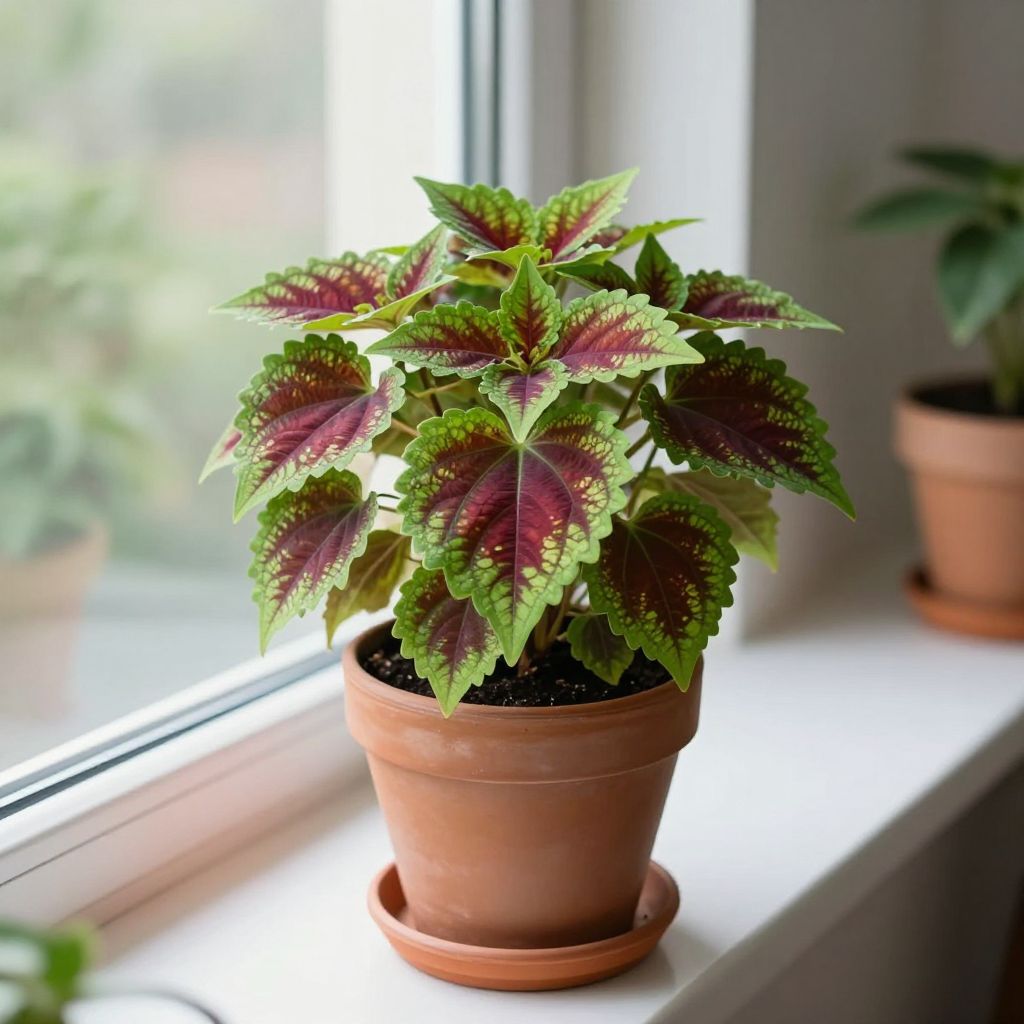
Can coleus grow indoors? Yes—coleus (Plectranthus scutellarioides) adapts very well to indoor growing if you give it bright light, warm temperatures, and consistent moisture without soggy soil. It’s one of the easiest colorful foliage plants to keep as a houseplant, especially if you want bold leaves through winter or year-round.
The main challenge indoors is light. With the right window, a good potting mix, and regular pinching, coleus can stay full and attractive instead of becoming leggy and dull.
Can coleus grow indoors?
Yes, coleus can grow indoors successfully as a houseplant, especially in bright indirect light or with supplemental grow lights. It prefers warm rooms, evenly moist soil, and regular pruning to stay compact. Indoors, it usually grows best as a foliage plant rather than a flowering plant.
What coleus needs indoors
Coleus is grown for its colorful leaves, and those colors stay best when the plant gets enough light without harsh direct sun. Indoors, aim for a spot near an east-facing window, a bright north window, or a few feet back from a sunny south or west window.
Light
- Best indoor light: bright, indirect light
- Morning sun is usually gentler than intense afternoon sun
- If stems stretch and leaves fade, the plant likely needs more light
- If leaves scorch, curl, or bleach, the light is too strong
If your home is dim, a simple LED grow light can make a big difference. Keep the light close enough to be useful, but not so close that the foliage overheats.
Temperature and humidity
Coleus likes warm conditions and does not enjoy cold drafts. Normal indoor temperatures are usually fine, but avoid placing it right next to a chilly window in winter or beside heating vents that dry it out.
- Keep it away from frost and cold drafts
- Moderate humidity helps, but it can adapt to average indoor air
- If your home is very dry, grouping plants together can help slightly
How to plant coleus in a container
Choose a pot with drainage holes. Coleus roots dislike standing water, and a pot without drainage is one of the quickest ways to cause rot.
Best potting mix
Use a light, well-draining potting mix rather than heavy garden soil. A standard indoor potting mix works well, and you can improve drainage by mixing in perlite if the soil tends to stay wet too long.
- Use a container with drainage holes
- Choose a pot only slightly larger than the root ball
- Use fresh potting mix, not reused outdoor soil
- Make sure excess water can escape freely
A pot that is too large can hold extra moisture around the roots, which increases the risk of root rot. Slightly snug containers are usually better for coleus indoors.
How to care for indoor coleus
Indoor coleus care is straightforward once you understand its rhythm: bright light, even moisture, regular pinching, and occasional feeding during active growth. The plant will tell you a lot through the look of its leaves and stems.
Watering
Water when the top inch of soil feels dry, then let excess water drain away completely. Coleus prefers evenly moist soil, but it should never sit in a saucer of water.
- Check the soil with your finger before watering
- Water thoroughly until it runs from the drainage holes
- Empty the saucer after watering
- Reduce watering in cooler, darker months when growth slows
Wilting can mean the plant is too dry, but it can also happen when roots are damaged from overwatering. If the soil is still wet and the plant droops, hold back on water and check for root problems.
Fertilizer
Coleus is a moderate feeder indoors. During active growth, a light feeding schedule can help maintain color and fullness, but too much fertilizer can push weak, floppy growth.
- Use a balanced houseplant fertilizer at a mild rate
- Feed only when the plant is actively growing
- Skip fertilizing if the plant is stressed, newly repotted, or growing slowly in winter
Healthy coleus should look compact and colorful, not pale and stretched. If growth is weak, the issue is often light, not fertilizer.
Pruning and pinching
Pinching is one of the most important parts of growing coleus indoors. Removing the growing tips encourages branching, which keeps the plant bushy instead of tall and bare.
- Pinch off the top set of leaves on each stem when the plant is young
- Repeat whenever stems start to get long and thin
- Remove flower spikes if they appear, unless you want to let the plant bloom briefly
- Trim any weak or leggy stems back to a leaf node
Regular pinching is the easiest way to keep indoor coleus attractive. Without it, the plant often becomes spindly and top-heavy.
Common indoor coleus problems and fixes
Most problems with indoor coleus come from light, water, or air circulation. The good news is that these are usually easy to correct once you spot the signs early.
Leggy growth
Long stems with wide gaps between leaves usually mean the plant is not getting enough light. Move it closer to a brighter window or add a grow light, then pinch back the stems to encourage branching.
Faded or dull leaf color
Poor color often points to insufficient light. Some varieties also lose intensity in low light, so even a healthy plant may look less vivid indoors than it does outside.
Leaf scorch
Brown, crispy patches can happen if coleus gets too much direct sun through a hot window. Move it to filtered light or farther from the glass.
Yellowing leaves
Yellow leaves may be caused by overwatering, poor drainage, low light, or natural aging of lower leaves. Check the soil first before changing anything else.
Pests
Indoor coleus may attract aphids, whiteflies, spider mites, or mealybugs. Inspect the undersides of leaves and stem joints regularly, especially if the plant has been outdoors and brought inside.
- Isolate the plant if pests appear
- Rinse leaves gently with water
- Remove heavily infested stems or leaves
- Use an appropriate insecticidal soap if needed, following the label
Good airflow and regular inspection help prevent pest outbreaks indoors.
Can you move coleus indoors from outside?
Yes, and many gardeners do this at the end of the season. Coleus can be brought inside before cold weather arrives, where it can continue growing as a houseplant through winter.
How to transition it indoors
- Bring it in before nights get chilly
- Check carefully for insects on leaves and stems
- Rinse the plant or clean foliage if needed
- Trim back overly long growth to make it easier to manage indoors
- Place it in a bright spot and watch watering closely during the adjustment period
Expect some leaf drop or a brief slowdown while the plant adapts to indoor conditions. That is normal if the light level is lower than it was outside.
Propagating coleus indoors
Coleus is easy to propagate from stem cuttings, which makes it a useful plant if you want to keep a favorite color going or replace an older, leggy specimen.
Simple cutting method
- Cut a healthy stem just below a node
- Remove the lower leaves
- Place the cutting in water or a moist potting mix
- Keep it in bright, indirect light
- Pot it up once roots are well developed
Propagation is also a good way to refresh your collection. New cuttings often grow more compactly than older plants that have been allowed to stretch.
Seasonal care for indoor coleus
Coleus grows most actively when days are long and light is strong. In winter, indoor growth often slows, so the plant may need less water and less fertilizer.
- Spring and summer: stronger light, more frequent watering, and regular pinching
- Fall and winter: slower growth, less water, and careful attention to drafts and dry air
If your home is very dark in winter, coleus may become sparse unless you supplement with artificial light. In that case, a grow light can make indoor success much easier.
Best reasons to grow coleus indoors
Coleus is a smart indoor plant if you want fast color, easy propagation, and a forgiving foliage plant that responds well to pruning. It is especially useful for brightening windowsills, plant shelves, and indoor displays.
- Colorful foliage without flowers
- Fast growth in good light
- Easy to shape with pinching
- Simple to propagate from cuttings
- Can be moved outdoors in warm weather and back inside later
Conclusion
So, can coleus grow indoors? Absolutely—if you give it bright indirect light, a draining pot, evenly moist soil, and regular pinching, it can thrive as a colorful houseplant. Start by checking your light level, then trim and reposition the plant if it begins to stretch.
If you enjoy growing houseplants from cuttings and want another indoor project, you may also like reading about growing strawberries indoors.