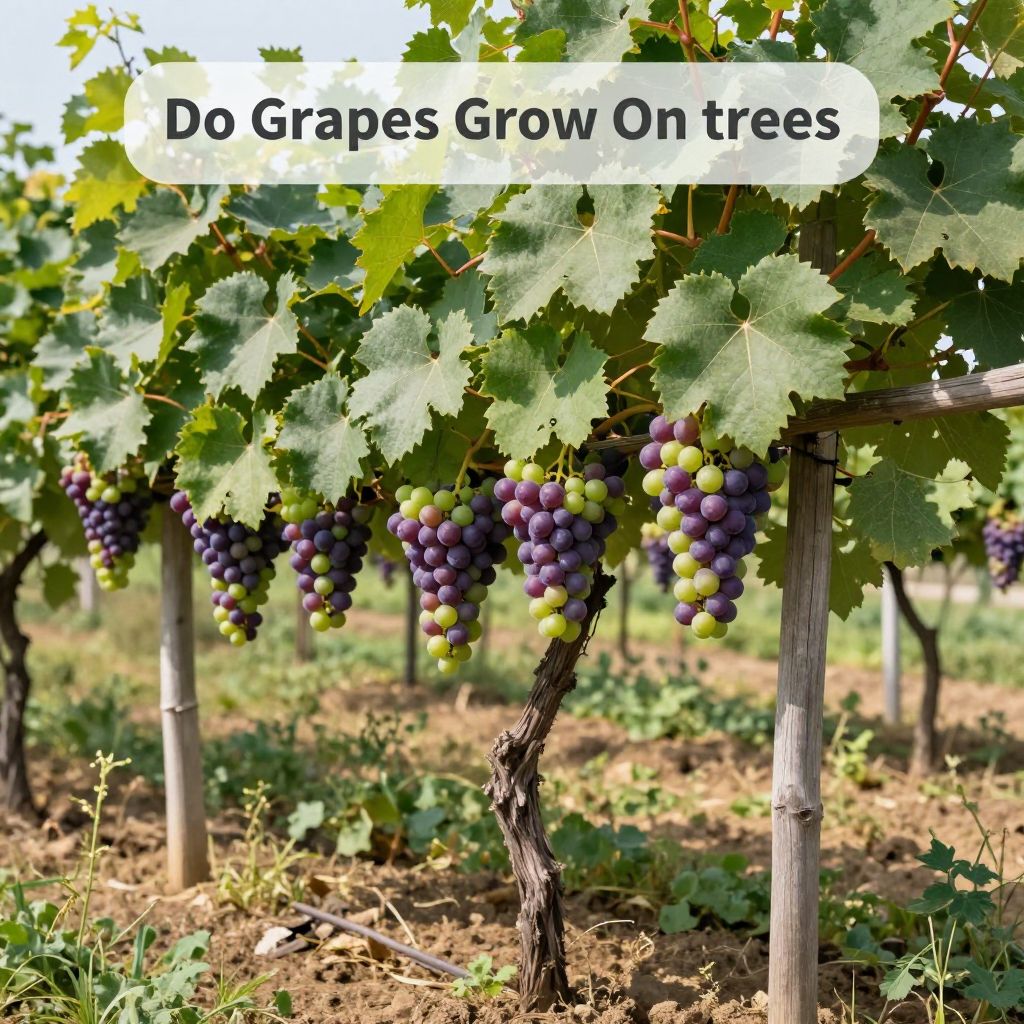
Do grapes grow on trees? If you’ve seen a leafy vine climbing a fence or arbor, it’s easy to wonder whether grapes come from a tree-like plant. The short answer is no: grapes grow on woody vines, not trees. They need support, regular pruning, and the right growing conditions to produce healthy fruit.
Once you know how grapevines grow, they become much easier to manage in a home garden. With full sun, good drainage, and annual pruning, you can train them over trellises, pergolas, or wires and enjoy fruit for many years.
Do grapes grow on trees?
No, grapes do not grow on trees. They grow on grapevines, usually from the genus Vitis, which are climbing, woody plants that need support to stay upright. In the garden, they are typically trained onto trellises, arbors, fences, or wires rather than allowed to form a tree canopy.
What a grapevine needs to grow well
Grapevines are long-lived plants, but they only perform well when their basic needs are met. The most important factors are sunlight, drainage, space, and pruning.
Sunlight
Grapes need full sun for the best fruiting. Aim for at least 6 to 8 hours of direct sunlight each day, and more is often better in cooler climates. Shade can lead to weak growth, poor ripening, and fewer clusters.
Soil and drainage
Well-drained soil is essential. Grapevines dislike soggy roots, so avoid low spots where water collects after rain. A loamy soil is ideal, but grapes can adapt to many soil types if drainage is good.
If your soil is heavy clay, improve the planting area with compost and consider planting on a slight mound or raised bed. That helps excess water move away from the roots.
Spacing and support
Because grapevines spread vigorously, they need room to grow and a sturdy support system. A trellis, arbor, or wire system keeps the vine lifted off the ground, improves airflow, and makes pruning and harvesting easier.
- Use strong posts and durable wire or trellis material.
- Plan for the vine to expand over time.
- Keep fruiting wood organized so sunlight reaches the clusters.
How to plant grapes the right way
Planting correctly gives your vine a strong start. The exact timing depends on your climate, but many gardeners plant dormant grapevines in late winter or early spring when the ground is workable and severe frost has passed.
- Choose a sunny site with good drainage.
- Loosen the soil in a wide planting area.
- Mix in compost if the soil is poor, but do not overdo rich amendments.
- Set the vine at the same depth it grew in the nursery.
- Water deeply after planting.
- Install support early so the vine can be trained from the start.
Young grapevines need time to establish roots before they can produce heavily. It is normal for the first season or two to focus more on growth than fruit.
Container growing
Grapes can be grown in large containers, but they are not ideal for tiny pots. Use a very large container with drainage holes, a well-draining potting mix, and a strong support structure. Container-grown vines usually need more frequent watering than in-ground plants, especially in hot weather.
Pruning is the key to grape production
One of the biggest mistakes gardeners make is letting grapevines grow wild. Grapes fruit on new shoots that emerge from one-year-old wood, so pruning is not optional. Without it, you may get lots of leaves and very little fruit.
Why pruning matters
Pruning helps control size, improves airflow, reduces disease pressure, and encourages better fruiting wood. It also keeps the vine manageable on a trellis or arbor.
Simple pruning basics
Exact pruning systems vary, but the general goal is the same: remove most of the previous season’s growth while keeping a strong framework of canes or spurs. If you are new to grapes, start with a simple training system and follow a pruning method suited to your vine’s growth habit.
- Prune during dormancy, when the vine is leafless.
- Remove weak, damaged, or crowded growth.
- Keep the strongest framework for future fruiting.
- Do not be afraid to prune hard; grapes usually respond well.
If you skip pruning, the vine may become tangled, shaded, and less productive. Over time, fruit quality often drops.
Watering, feeding, and mulching grapes
Grapevines need consistent moisture while they are getting established, but they do not like wet feet. The goal is steady watering without waterlogging the root zone.
Watering tips
Water deeply after planting and during dry spells, especially in the first year. Mature vines are more drought-tolerant, but fruit development can suffer if the plant becomes too dry during active growth.
Instead of watering on a rigid schedule, check the soil. If the top few inches are dry and the plant looks stressed, it is time to water. In rainy climates, you may need very little supplemental irrigation.
Feeding and compost
Grapes usually do not need heavy feeding. Too much nitrogen can produce lush leaves and weak fruiting. A modest topdressing of compost in spring is often enough for many home gardens, especially if the soil is already reasonably fertile.
- Use compost to improve soil structure.
- Avoid overfertilizing with high-nitrogen products.
- Let soil test results guide any major amendments.
Mulching
A light mulch can help conserve moisture and suppress weeds, but keep it a few inches away from the trunk. Piling mulch directly against the stem can encourage rot and pests.
Common problems when growing grapes
Grapes are rewarding, but they can be affected by pests, diseases, and training mistakes. Catching problems early makes a big difference.
Pests
Birds are often one of the biggest challenges once fruit begins to ripen. Netting may be needed to protect clusters. Other pests can include insects that chew foliage or feed on fruit, depending on your region.
- Inspect leaves and clusters regularly.
- Remove damaged fruit promptly.
- Use physical barriers like netting when needed.
Diseases
Grapevines can develop fungal problems, especially in humid conditions or where airflow is poor. Pruning, spacing, and keeping the canopy open are some of the best preventive steps you can take.
Wet leaves and crowded growth create ideal conditions for disease. If you notice spotting, mildew, or fruit rot, remove affected material and improve airflow around the vine.
Training mistakes
Many grape problems start with poor structure. If the vine is allowed to sprawl on the ground or overgrow its support, fruiting becomes harder and disease risk rises.
- Train the main stem early.
- Keep the vine tied loosely to support as it grows.
- Prune annually to maintain shape and productivity.
How to propagate grapes
Grapes are commonly propagated from cuttings rather than seed in home gardens. Cuttings are a practical way to clone a known vine, though success depends on the type of grape and your local conditions.
If you are trying propagation, use healthy dormant wood from a reliable vine and follow a method appropriate for your climate and grape type. Seed-grown grapes are less predictable and usually not the best choice for home gardeners who want fruit similar to the parent plant.
When to harvest grapes
Grapes do not continue to ripen much after harvest, so timing matters. Pick fruit when it tastes sweet, has developed full color for the variety, and detaches easily from the cluster.
Do not judge ripeness by color alone. Taste a few berries from different parts of the vine and check whether the flavor is balanced and pleasant. If the fruit is still tart, give it more time on the vine if weather and birds allow.
Signs grapes are ready
- Clusters have reached typical color for the variety.
- Berries taste sweet rather than sharply sour.
- Seeds are mature and the skin feels less tough.
- Fruit separates cleanly when snipped, not pulled.
Can you grow grapes in a landscape design?
Yes. Grapevines can be both productive and ornamental when trained well. They work beautifully on pergolas, fences, and arbors, where they provide shade and seasonal interest.
Just remember that a decorative grapevine still needs pruning and maintenance. If you want a neat landscape feature, choose a support system that makes annual pruning and harvest easy to reach.
Quick mistakes to avoid
Most grape-growing problems come from a few common errors. Avoiding these will save you time and disappointment.
- Planting in shade.
- Using poorly drained soil.
- Skipping pruning.
- Overfertilizing with nitrogen.
- Letting the vine sprawl without support.
- Ignoring pests and disease until late in the season.
Conclusion
So, do grapes grow on trees? No, they grow on trained woody vines that need sun, support, drainage, and annual pruning. If you give them the right structure and care, they can become one of the most productive plants in your garden.
Start by choosing a sunny site, setting up a strong trellis, and planning your pruning from the beginning. If you want to keep learning, look for more guidance on grapevine pruning and trellis training before your next growing season.